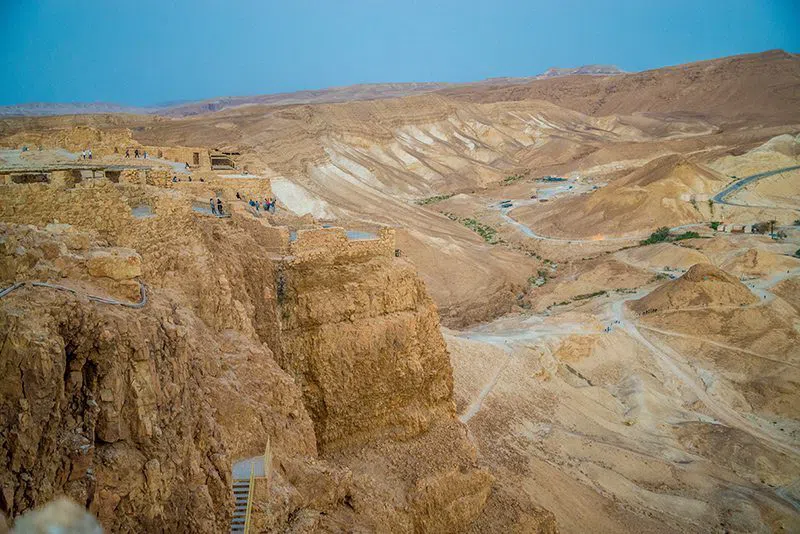

The coach leaves Tel Aviv while the streets are still cool and the sea is still black, and for the first hour there is nothing to look at. Then the road drops below sea level, the air turns heavy and mineral, and the Judean Desert opens out in ochre and grey with the Dead Sea lying flat at the bottom of it like beaten metal. By the time you stand at the foot of Herod's mountain the day has already chosen its own shape, and in September what chooses it is the heat.
This is the standard long day out of the city, and one of the few trips where the itinerary has to bend around the weather. In the wrong order you spend the hottest four hours of the day on bare rock. In the right order those same four hours go on a museum, a shaded garden, a spa or the water. Everything below is written for that problem. For the rest of the city, the Tel Aviv guide covers what you come back to.
What you see up on the mountain
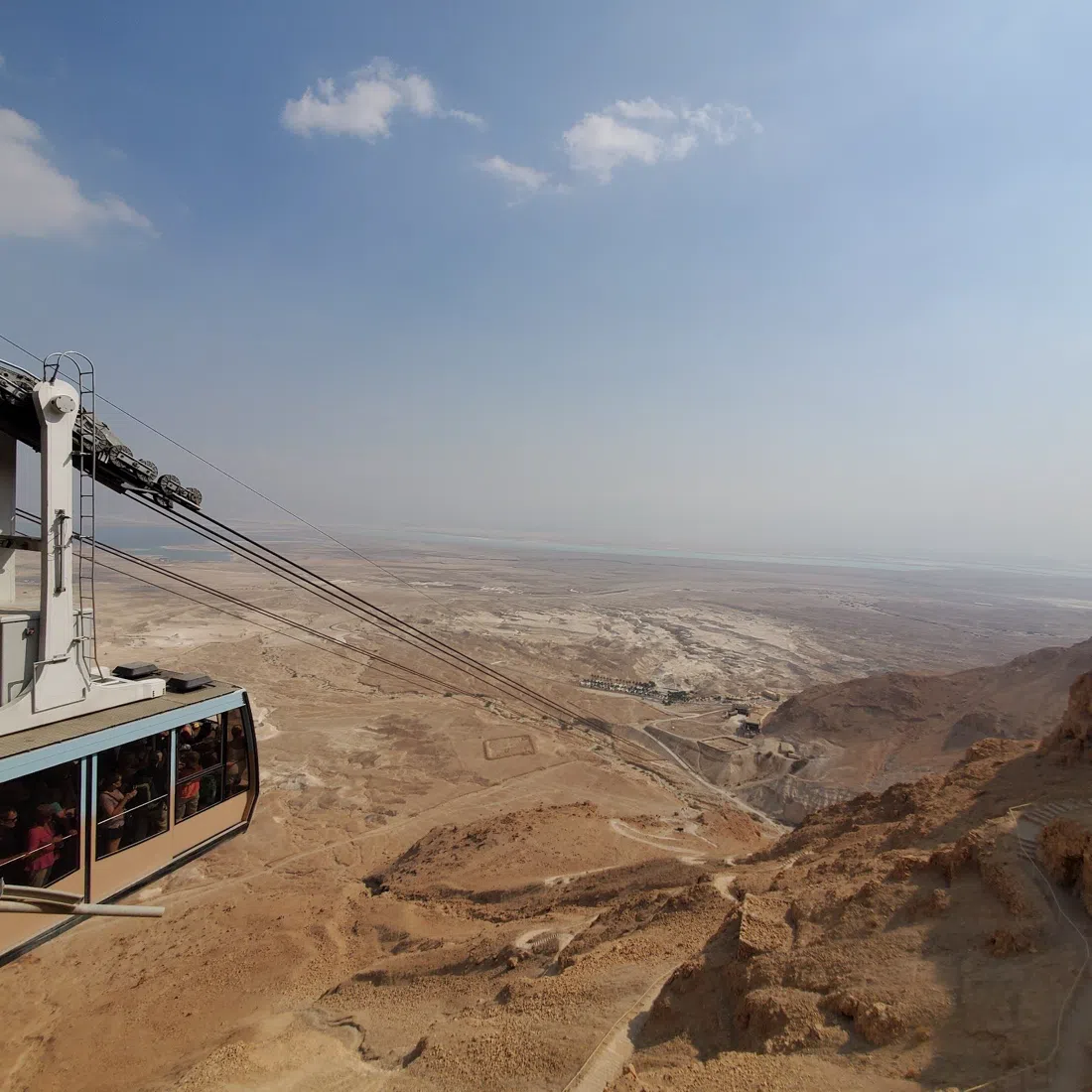
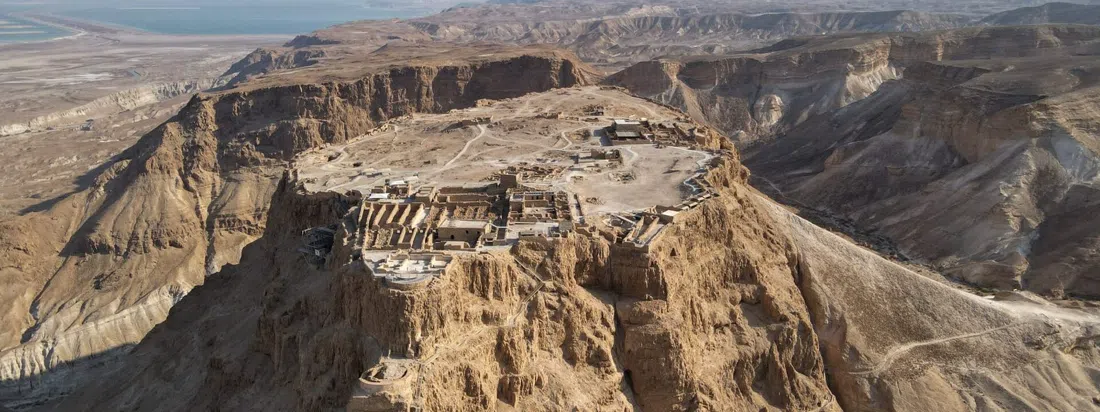
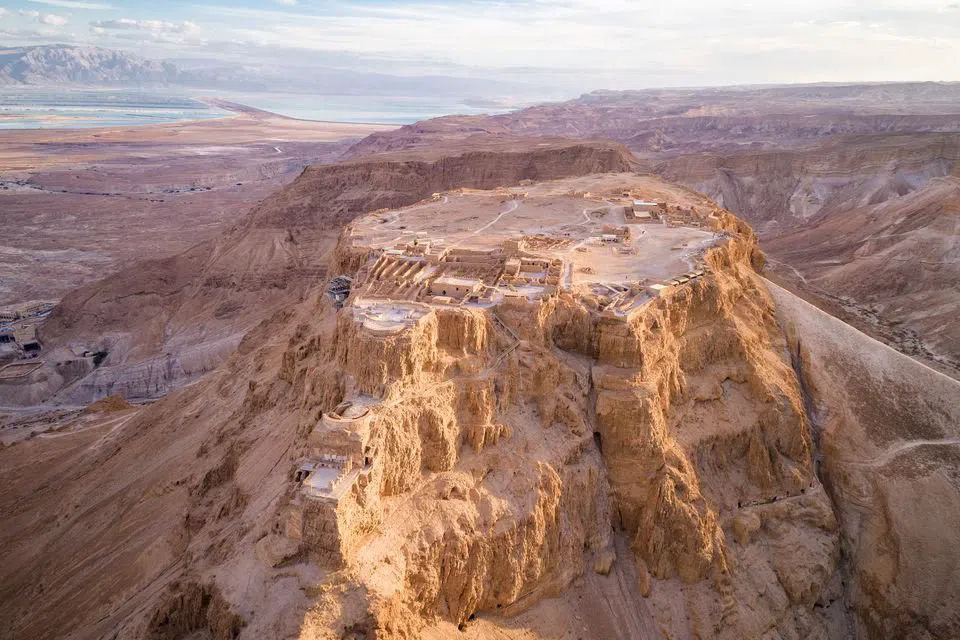
Masada National Park (east gate, Dead Sea side) is the anchor of the day, and the eastern side is where the visitor centre, the museum, the cable car and the Snake Path all sit. It is the side every coach out of Tel Aviv uses. The plateau is isolated on all four sides, and the walk around the top takes longer than most people budget for: an hour if you are brisk, closer to two if you stop at the signs.
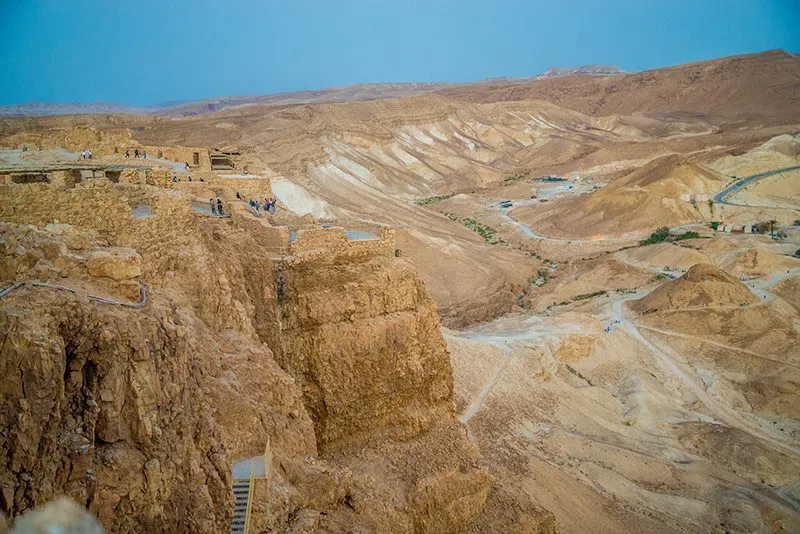
Herod fortified the mountain in the first century BCE and built a palace that hangs off the northern tip on three stepped terraces. You look down into it from the rim rather than across at it, which is why photographs never prepare you for the drop. Behind that are the long storerooms, the bathhouse with its underfloor pillars still standing in rows, and the cisterns cut into the rock, the engineering that made a fortress possible on a mountain with no water of its own.
The other half of the story is below you. Walk to the western rim and you can read the Roman siege works on the desert floor: the camps as rectangles of low stone wall, the wall that linked them, and the earth ramp the Tenth Legion pushed up against the cliff. Josephus wrote what he says happened when they reached the top, and the site does not oversell that account. Standing on the rim with the ramp in view is what makes the argument legible; the rest is reading.
Park entry is NIS 37 for an adult and NIS 21 for a child. That is the price of the mountain, not the price of getting up it.
Getting up the mountain without hurting yourself
The Masada Cable Car (eastern visitor centre) is ticketed separately and is not included in park entry: NIS 32 one way for an adult and NIS 16 for a child, NIS 54 and NIS 32 return, or a combined entry-plus-return ticket at around NIS 80. In September that ride is the difference between a comfortable visit and a dangerous one. It loads coach parties in batches, so a group should expect to queue in the shade of the terminal rather than outside. The hard rule is the cut-off: the last ascent is an hour before the site closes, and entry to the cable car stops an hour before closing, so a late group simply does not go up.
The Snake Path is the other eastern option, roughly 350 metres of climb and about 900 steps with no shade anywhere on it. In September it is a pre-dawn walk or it is nothing, and the park routinely shuts it once the temperature climbs. If you want it, sleep at the bottom. HI Masada Hostel (eastern visitor centre) takes singles, families and organised parties in dorms and private rooms with breakfast, parking and Wi-Fi included, and it means waking fifteen minutes before the gate opens instead of leaving Tel Aviv at three in the morning.
There is a second gate entirely. Masada West / Roman Ramp entrance (Route 3199, desert side) has free parking and toilets but no cable car, and the climb is a different proposition: about 60 metres of ascent over roughly half an hour, against the Snake Path's 350 metres. It opens about thirty minutes before sunrise, and park entry is the same NIS 37 and NIS 21. It is a separate entrance on the far side of the mountain, not a variant of the eastern one, so choose it before you set off, not on the day.
Whichever way you go up, fill your bottles first. There is nowhere on the summit to buy food or water. The Masada Visitor Center food court and shop (eastern visitor centre) is the last counter before the climb, sized for coach parties, with sandwiches and salad plates at roughly NIS 25 to NIS 60.
The hours when the sun wins
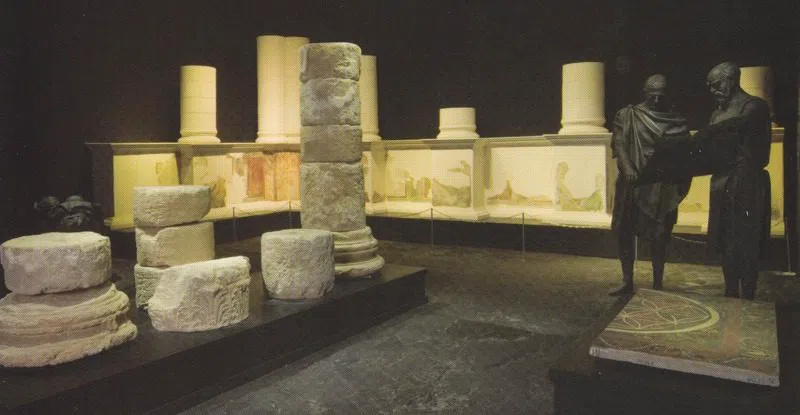
Between about eleven and four in September the footpaths stop being reasonable, and the day needs somewhere indoors. The Yigael Yadin Masada Museum (eastern visitor centre) is the one weather-proof stop on the mountain itself: air-conditioned, audio-guided in Hebrew and English, and NIS 20 per person on top of park entry, though some combined tickets fold it in. It is named for the archaeologist who excavated the site in the 1960s, and the finds in the cases are his. Because the audio guide does the talking, a full coach load fits in without anyone raising their voice over the exhibits, which is not true of the summit.
Further up the shore, Synergy Spa (Ein Gedi Hotel) is the honest replacement for the old Ein Gedi Spa, which closed for good in 2020 as the sinkholes closed in around it. It is indoors, which is the entire point on a 40°C afternoon. Day entry for non-guests is NIS 130, or NIS 50 with a 40-minute treatment and free with a 50-minute one. Hours are Sunday to Thursday and Saturday 09:00 to 19:00, Friday 10:00 to 18:00. Note the door policy: on Fridays, Saturdays and holidays you only get in with a massage booked, so a group has to plan the whole afternoon around that or pick another day.
The oasis road between the mountain and the water
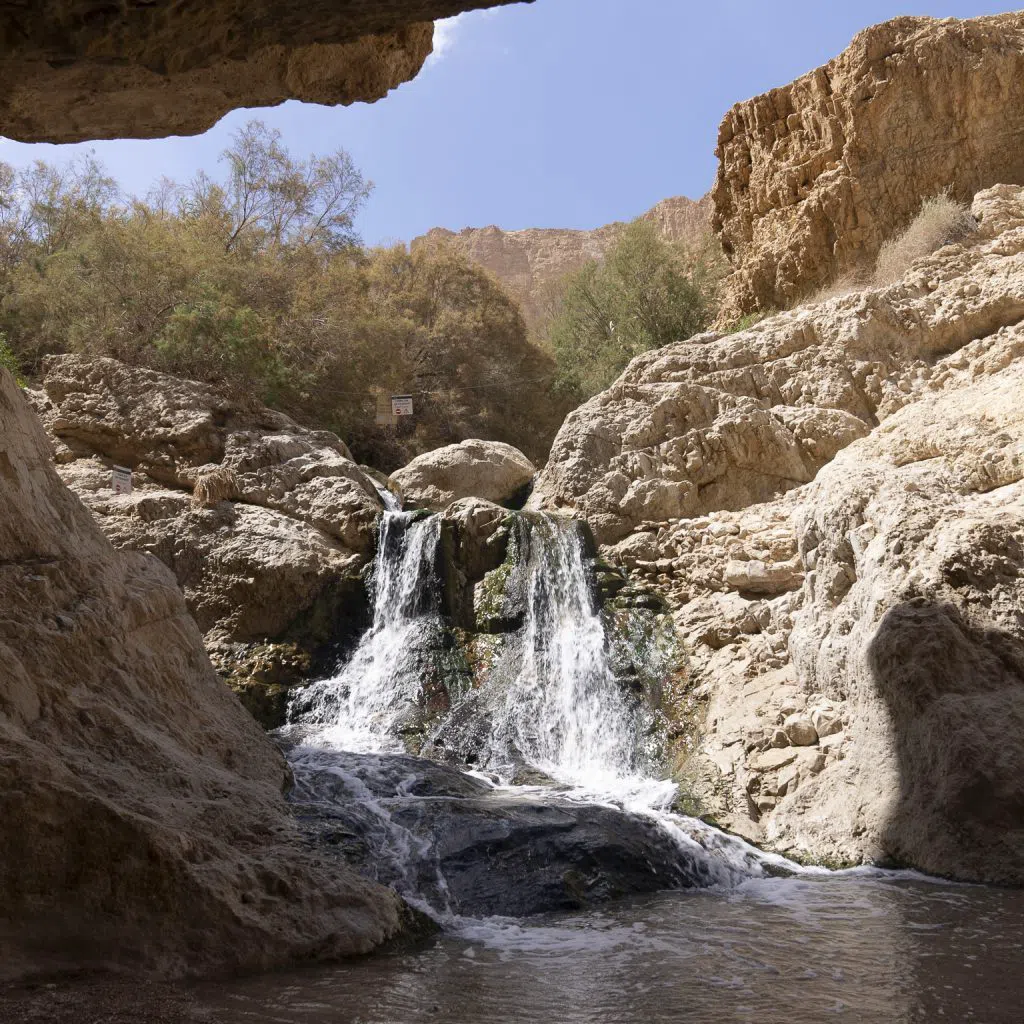
En Gedi Nature Reserve (Dead Sea western shore) is the green interruption in all that rock, and it costs NIS 31 for an adult and NIS 16 for a child. Be realistic about what it is now. Since the 2025 floods the public Wadi David route is a short accessible path to the first waterfall and no further, which is fine for a mixed group and no longer a long hike. Nahal Arugot has been rerouted and suits fit walkers only, and the Ein Gedi Spring and Dudim Cave route is not reliably open. Ask at the gate what is walkable that morning rather than trusting an old trail map.
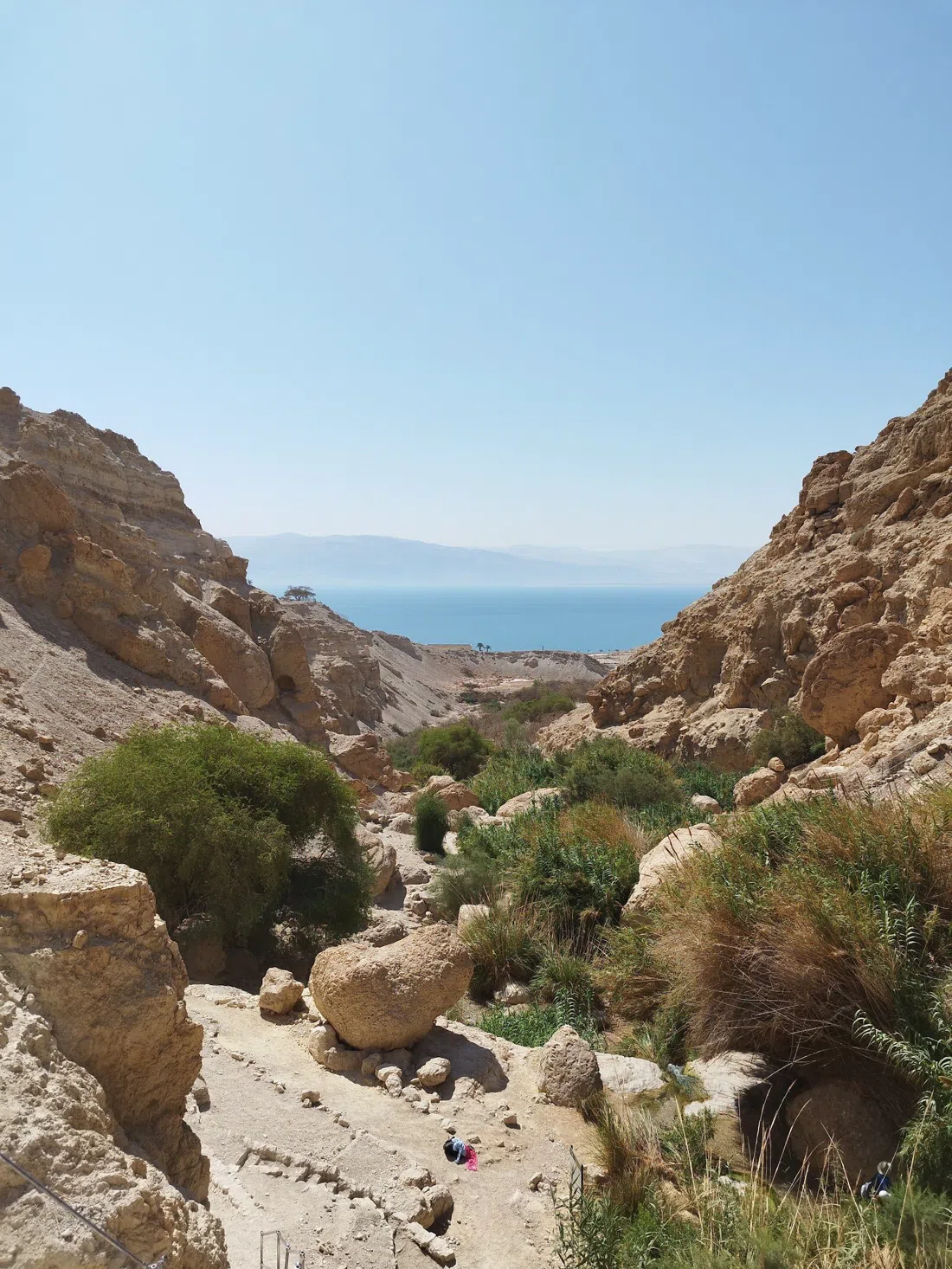
Ein Gedi Botanical Garden (Kibbutz Ein Gedi) is the low-effort stop in the same stretch: over a thousand plant species, shade, guided tours if you want one, and the odd distinction of being the only botanical garden in the world that people live inside. Entry is NIS 24 for an adult and NIS 20 for a child, and booking in advance is required, which suits an organised group and catches out couples who turn up on spec.
Where you actually get in the water
Ein Bokek Public Beach and promenade (southern basin) is the free one, with no ticketing at all, so a coach party walks straight on. The regional council runs the showers, changing rooms, shade and lifeguards, the lifeguard hours are 07:00 to 18:00 in summer and 07:00 to 16:00 in winter, and there are accessible bathing steps and accessible paths off the promenade. The southern basin here is an evaporation pond, so the water level is stable and the sinkholes that plague other stretches are not an issue. If your day runs south, this is where you swim.
On the northern shore, Kalia Beach is the long-standing coach stop: NIS 45 for adults 13 and over, NIS 35 for children aged 3 to 12, students, seniors, visitors with disabilities and soldiers, with showers, toilets, chairs, umbrellas and Wi-Fi included, open 08:00 to 18:00 daily in summer, and group rates available. It sits in Area C of the West Bank, which some travellers will want to know before they book rather than after.
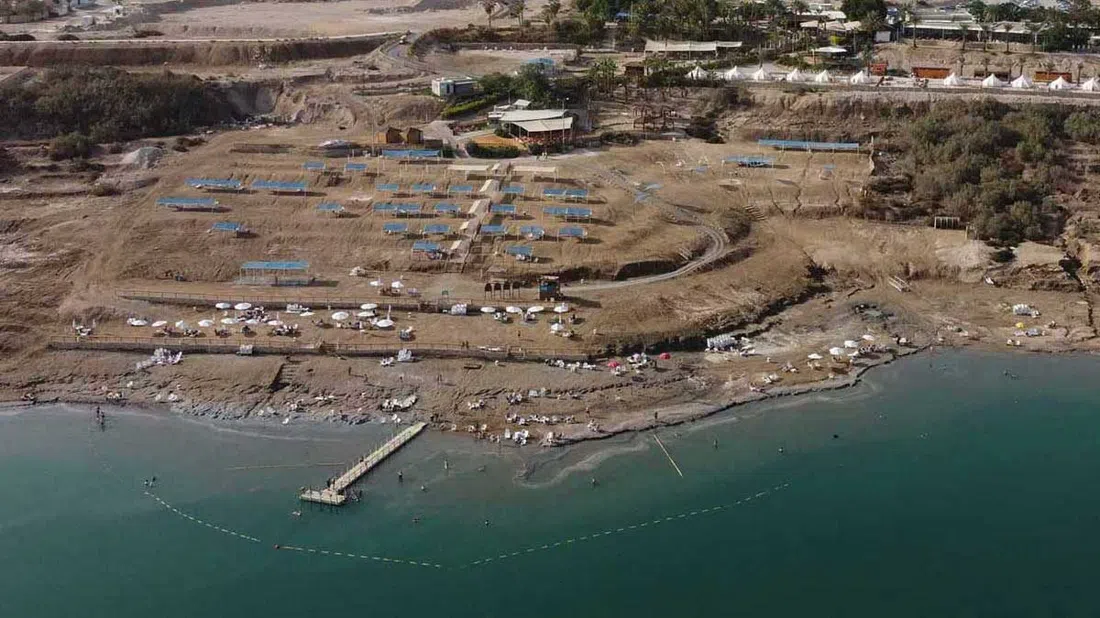
Neve Midbar Beach (northern shore) is the quieter version of the same stretch, staffed and lifeguarded, with changing rooms, lockers and hostel rooms attached, at roughly NIS 50 to NIS 85 per person. It is where you go when Kalia's car park is full of coaches. Biankini Village Beach (northern shore) is the one where lunch is a real meal rather than a kiosk, with lawns, bungalows, a Moroccan restaurant, a big car park, lifeguards, sunshades and sunbeds included in the paid entry. It stays open until 20:00, which is the only way to still be there when the light goes off the Jordanian mountains.
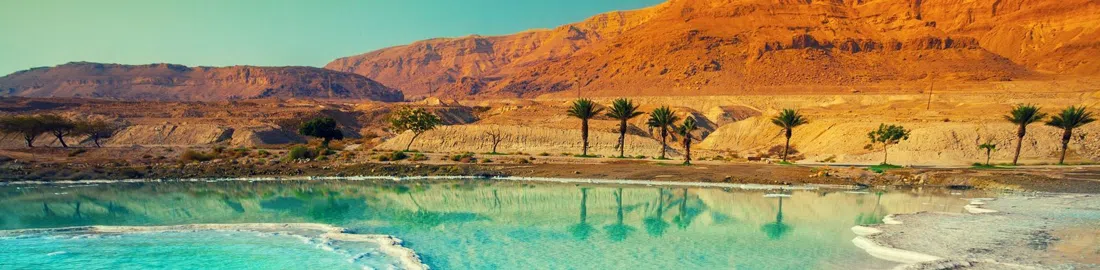
You float rather than swim. Keep your face out of the water, and fifteen to twenty minutes is plenty. Do not shave that morning, wear something on your feet for the salt crust, and rinse properly afterwards. Every one of these beaches has showers for exactly that reason.
The two stops your route decides for you
If the day runs north, Qumran National Park (northern shore) is the natural third stop: NIS 31 adult and NIS 16 child, with a film, a shop and a café, and one to two hours covers it comfortably. The caves where the Dead Sea Scrolls were found are the reason to stand there. Watch the clock: last entry is an hour before closing, and closing is 17:00 in summer and 16:00 in winter, an hour earlier on Fridays and holiday eves. The AHAVA Visitor Center (Mitzpe Shalem) is on the same road, free to enter, wheelchair accessible, open Sunday to Thursday 08:00 to 17:00, Friday 08:00 to 16:00 and Saturday 08:30 to 17:00. It is a factory shop and it is the stop groups get parked at most often. Useful if you want the mud products at factory prices, entirely skippable if you don't.
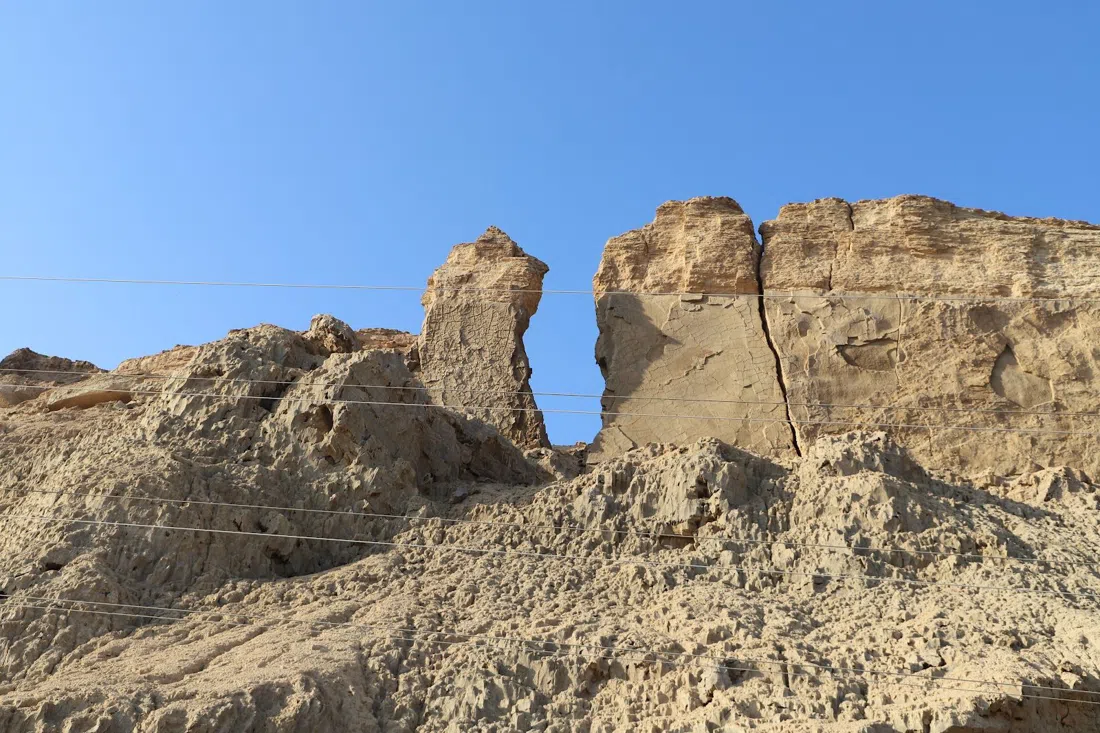
If the day runs south past Ein Bokek instead, Mount Sodom and the Lot's Wife pillar (Judean Desert Nature Reserve) is a roadside photo stop and nothing more: free from the marked pull-offs, looking out over the salt evaporation pans, with no shade, no water and no toilets. Five minutes, in and out.
Who this day suits and who it doesn't
Masada is built for coaches. The eastern visitor centre has a large bus park, group ticketing desks and group cable-car loading, and guided parties are the norm there rather than the exception. If you are two people who want quiet, timing gets it for you, not location: be on the first cable car, walk the summit anticlockwise away from the guided flow, and be back down before the mid-morning wave.
Families do well on the eastern side and badly on the western one. The Roman Ramp entrance only makes sense if everyone in the party can walk uphill for half an hour. Anyone with limited mobility should stay east, take the return cable car, and plan Ein Bokek for the water, where the bathing steps and promenade paths are accessible. Couples get more out of the botanical garden and the spa than out of the northern beach strip; groups get more out of the beaches and the museum, where the facilities are sized for them.
A guided day out of Tel Aviv exists and runs seven days a week, with prices starting from 120 USD per person, and the current season runs from 23 September 2026 to 16 September 2027. That price buys you the driving, which is the tedious part, and someone else watching the cable car cut-off. Doing it yourself with a hire car is cheaper at the gate and lets you control the order of the stops, which on a 40°C day is worth more than it sounds.
The best time to go in September
Start before sunrise or don't start. Sunrise in late September is shortly after half past six, the western gate opens about thirty minutes before it, and the first eastern cable car is the other way to be on the summit while the light is still low and the rock still holds some of the night's cool. The summit is comfortable until roughly nine, tolerable until eleven, and after that it is an endurance exercise.
Build the middle of the day indoors (museum, garden, spa) and put the water in the late afternoon, when the sea is warm, the glare is off it, and the beaches have emptied of the morning coaches. If you want the mountains across the water to turn colour, you need a beach that stays open past seven.
On days of the week: Fridays shorten everything, holiday eves run on Friday hours, and Saturday closes most public transport from Friday afternoon until Saturday night. The spa's massage-only door policy on Fridays and Saturdays is the single rule most likely to derail an afternoon, so check it before you build the day around it.
Is it worth it
Yes, with one condition: treat it as one long day rather than two half days stapled together. The mountain rewards the early start, and the sea rewards patience with the timetable. If you can only leave Tel Aviv at nine in the morning in September, you will arrive to a closed Snake Path, a hot summit and a cable car cut-off bearing down on you, and you would be better off going in November. Done at the right hour, it is the most complete day out of the city: a first-century fortress, a desert oasis, and water you cannot sink in, all inside a hundred kilometres.
Practical notes
Transport: there is no train. Intercity buses run down the shore but the timetable thins out badly, and almost nothing runs from Friday afternoon to Saturday night, so a self-driven day that includes a Saturday needs a hire car. Driving from Tel Aviv, plan on twelve hours door to door with the stops in. Fuel up before you turn onto the shore road; stations are sparse.
Cash: prices are in shekels and cards work at every ticket desk, the cafeteria and the beaches. Carry a little cash anyway for lockers, sunbed hire and the roadside stalls.
Timing: leave in the dark. Summit first, indoors in the middle, water last. Watch two cut-offs: the cable car stops an hour before the park closes, and Qumran's last entry is an hour before its own close.
Budget at the door: park entry NIS 37 adult and NIS 21 child; combined entry with return cable car around NIS 80; museum NIS 20; lunch at the visitor centre NIS 25 to 60; En Gedi Nature Reserve NIS 31 adult and NIS 16 child; botanical garden NIS 24 and NIS 20, booked ahead; Kalia NIS 45 and NIS 35, or nothing at all at Ein Bokek; Synergy Spa NIS 130 for day entry. A full independent day lands somewhere around NIS 150 to NIS 250 a head before transport.
Where to sleep: most people do this from the city and come back the same night, which makes the base matter more than the bed. Anywhere with quick access out to the highway saves you twenty minutes in the dark. Compare rates and locations through Tel Aviv hotel search. If you want the Snake Path at sunrise, the hostel at the foot of the mountain is the answer instead.