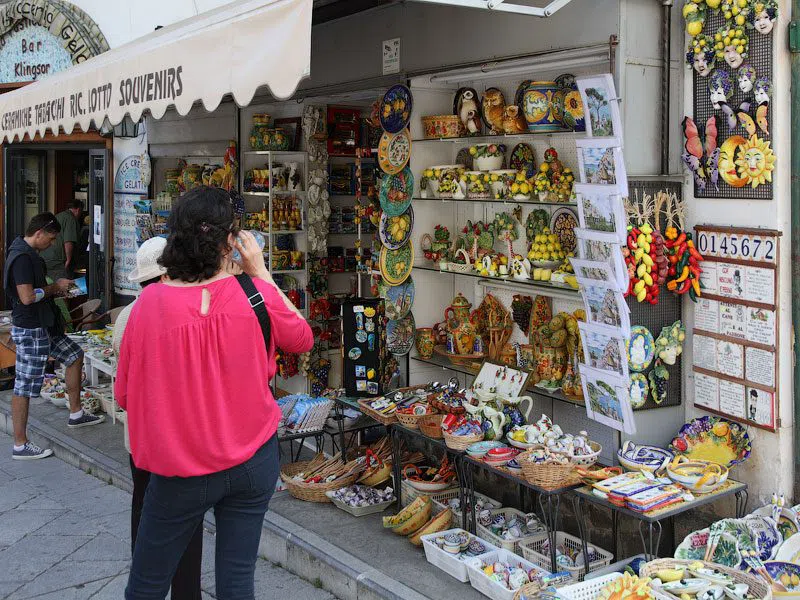
The first thing you notice on HaCarmel Street in September is the temperature under the tarpaulins: several degrees hotter than the open pavement, thick with crushed mint, wet cardboard and the vinegar coming off the pickle barrels. By ten in the morning the fruit sellers are shouting across a lane wide enough for two people and a crate, and the only sane way through is to stop walking and start eating. Plan your stops and the shuk feeds you well for the price of a sandwich. Walk in hungry at one o'clock with no plan and it will chew you up and spit you out on Allenby.
What the market actually is
Carmel Market (Shuk HaCarmel) runs downhill from Magen David Square towards the sea in central Tel Aviv, and it is a free, open-air street market. You do not book, you do not pay at a door, and nobody cares what you wear. It trades roughly Sunday to Thursday 07:00-21:00, Friday 07:00 until about 16:00, and it is shut all day Saturday. That Saturday closure wrecks more visits than anything else here: people arrive on a Saturday morning with the market circled on a map and find shuttered stalls and a street cleaner.
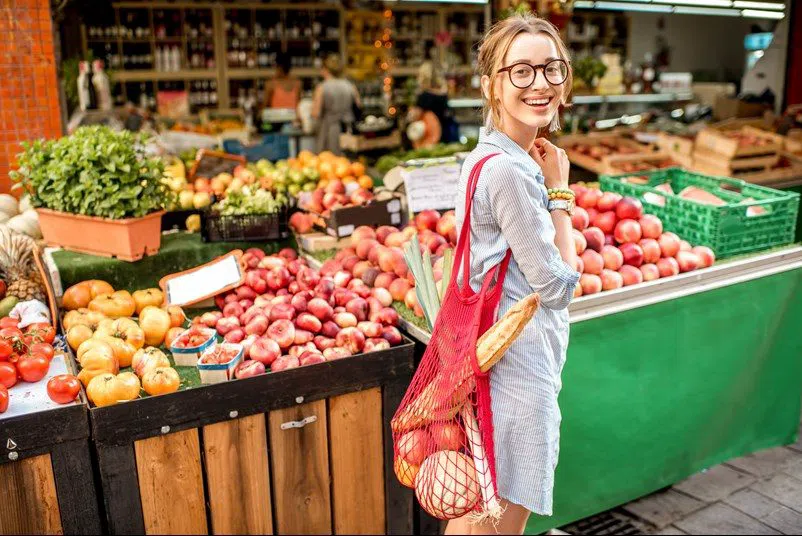
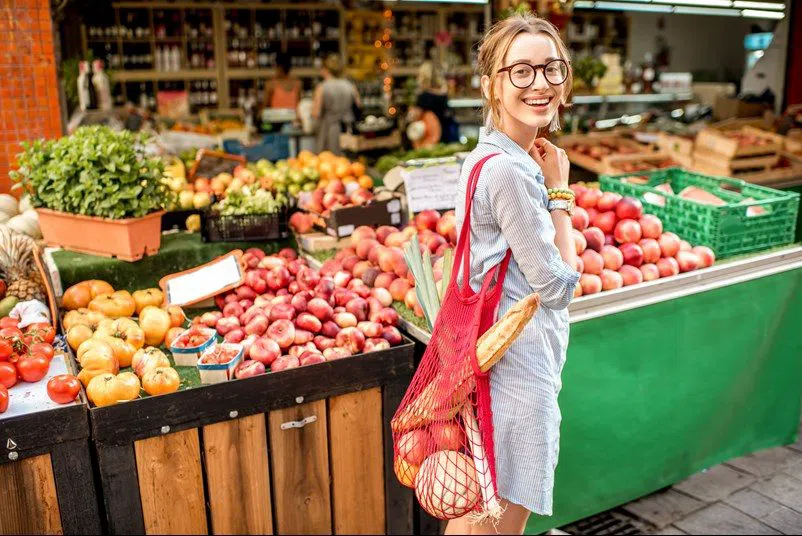
The shape of the place matters for how you eat. The top of the lane is produce: dates, stone fruit going over in the heat, herb bunches, halva slabs the size of paving stones. Push further down and it turns into fish, butchers, spice sellers, cheap homeware, and then the food stalls proper. Street snacks run roughly 10-45 ILS, a sit-down plate 60-120 ILS.
If you are moving as a group, be realistic. Eight to twelve people fit in the market, but in the central lane at midday you will be single file, shouting at each other's backs. The side alleys are where groups can actually stand still, which is exactly why guided walks cluster there instead of in the main run.
The quarter the eating leads into
The produce lane is what people photograph. The meal is one street west, in Kerem HaTeimanim (the Yemenite Quarter), the grid of narrow residential lanes immediately behind the market, free to walk, with meals running 50-140 ILS. This is where the city keeps its highest concentration of veteran Yemenite kitchens, and it is why the shuk is worth more than twenty minutes and a photo of a spice pyramid.
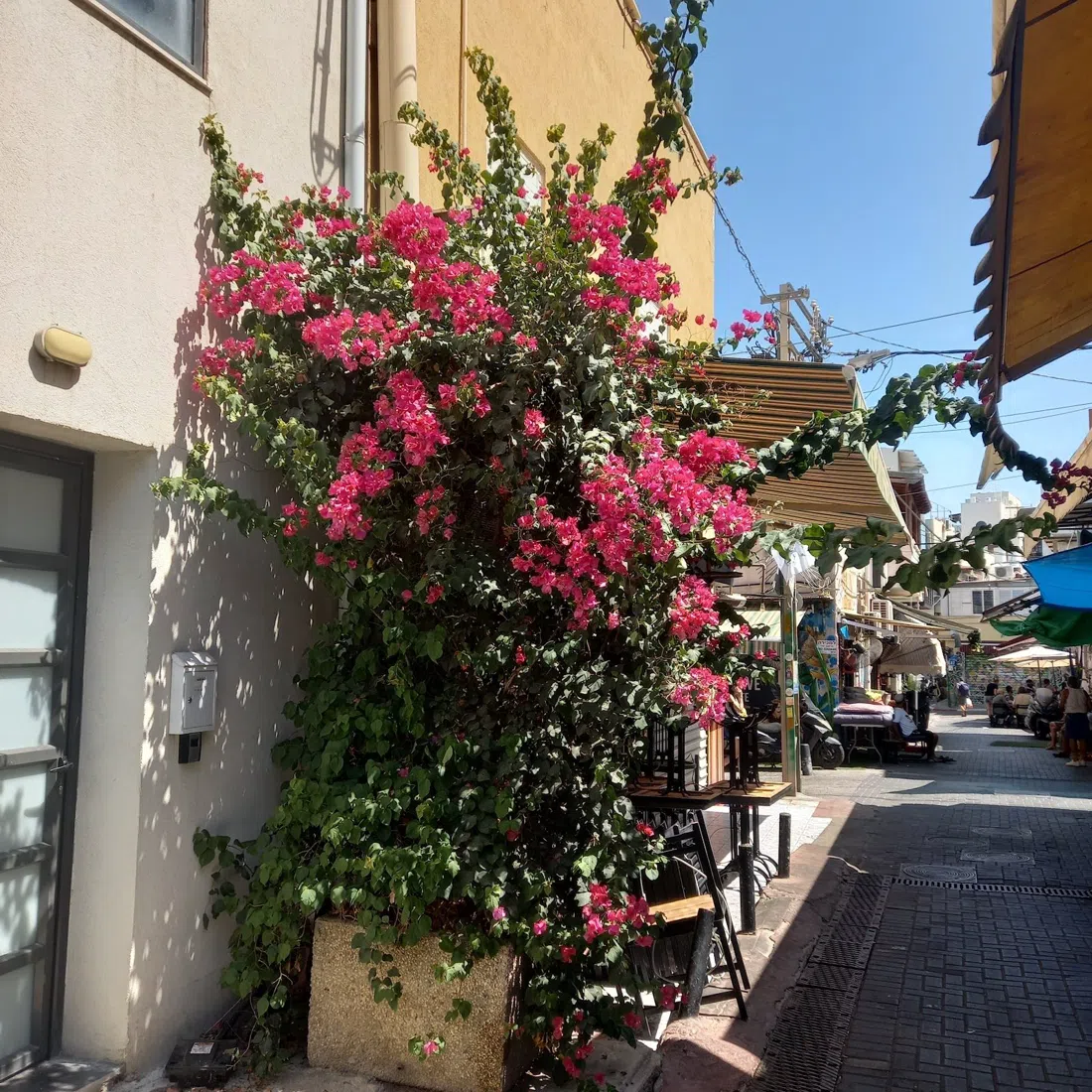
It is also somebody's home. The lanes are tight, the balconies are low, and washing hangs over the pavement. A group of ten standing across a Kerem lane blocks it completely, so keep to the wider corners and let residents through. Almost every guided market walk ends up here; the good ones do it quietly.
Three kitchens that decide your morning
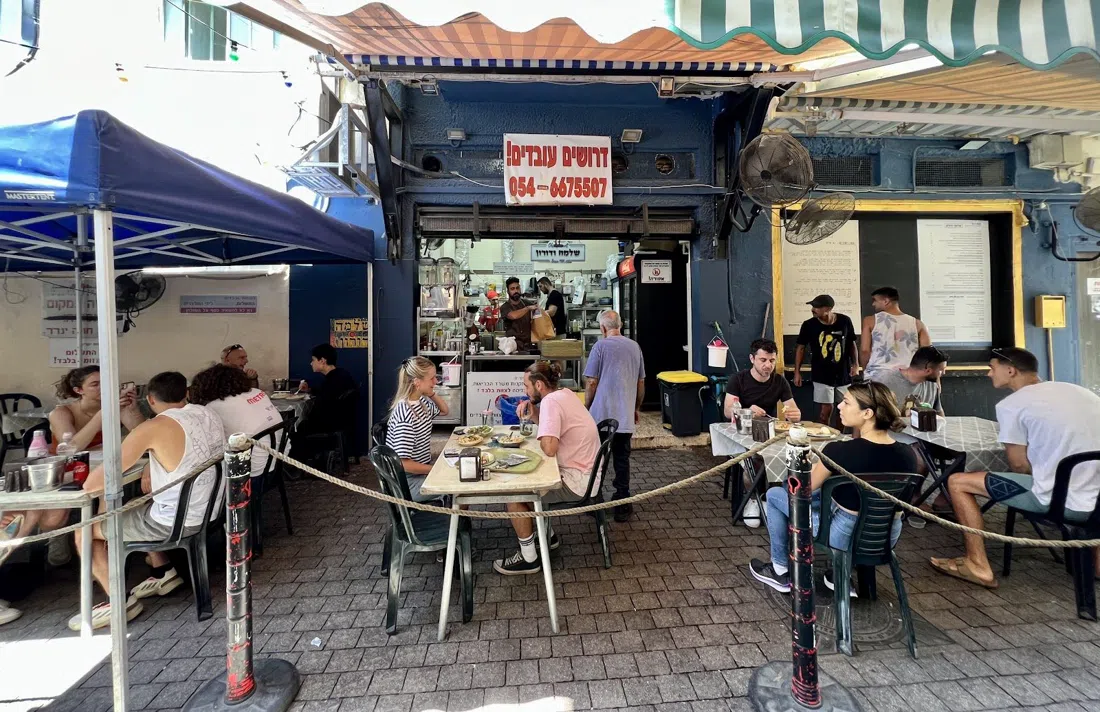
Shlomo & Doron Hummus, on the Yemenite Quarter edge of the market, has served the same recipe since 1937 and is now run by the grandson. A hummus plate is roughly 30-45 ILS, and the room is cramped and fast-turning: you are not queuing behind a system, you are waiting for a stool. It is cash only, which catches people out, and it closes around 15:00 and does not open Saturdays. Come in the morning or early afternoon, or not at all. A group of six or more should plan to split across two sittings rather than stand in the doorway.
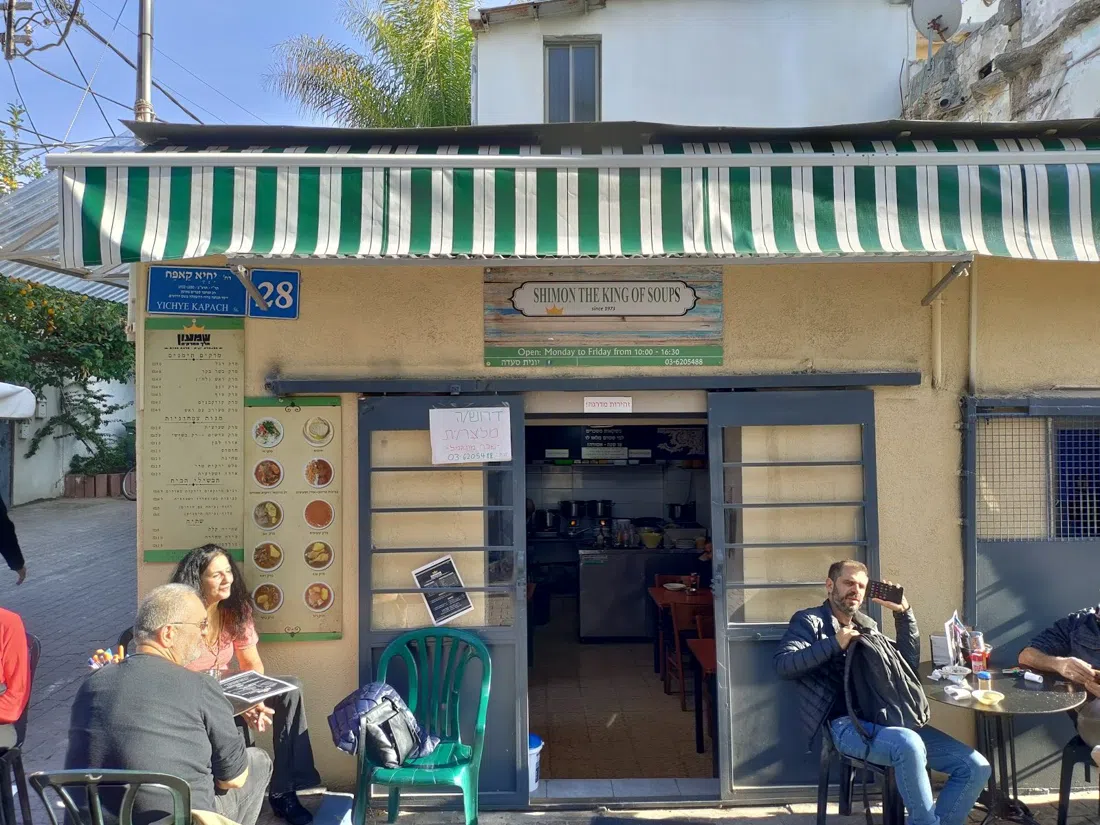
Shimon Melech HaMarakim (Shimon the Soup King) in Kerem HaTeimanim is run by Yonit Saada, daughter of the late Shimon, and has been on every visitor's list since the Tel Aviv episode of Somebody Feed Phil. Order the oxtail soup and the hilbe. Soup with bread runs roughly 45-75 ILS and the room holds a handful of tables, so a party over six will be standing or waiting outside in the sun. In September, eating a bowl of long-cooked oxtail at noon is a genuine decision. Do it at opening, or after the worst of the afternoon.
Café Yom Tov, also in Kerem HaTeimanim, is the softer landing of the three: pavement and interior seating, open Sunday to Friday 08:00-16:00, breakfast and plates roughly 45-80 ILS. The eggplant saluf is the dish people remember from the quarter, flatbread under charred eggplant, eaten with a fork you barely need. Small groups walk in; anything larger should phone ahead. Some evenings it turns into a low-key music salon, which is a different visit entirely.
Sitting down when standing stops being fun
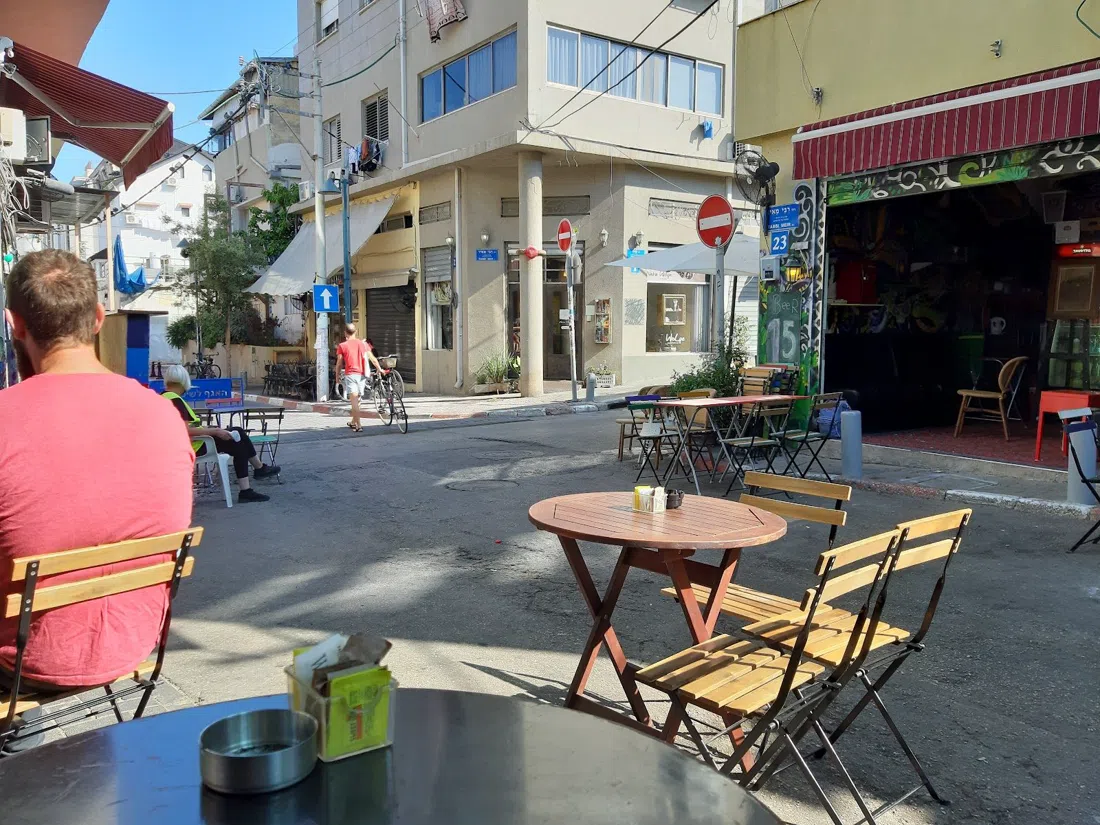
HaBasta, in the market lane itself, is chef Elon Amir's room, and the menu changes daily according to what the surrounding stalls actually had that morning. Mains run roughly 80-160 ILS and the wine list runs high. It is a small room plus pavement tables: fine for two, but reserve for anything over four, and do not arrive as a group of eight expecting to be absorbed. As a post-walk dinner it shows you what you just walked through, the stalls feeding the city's kitchens across a hundred metres of street.
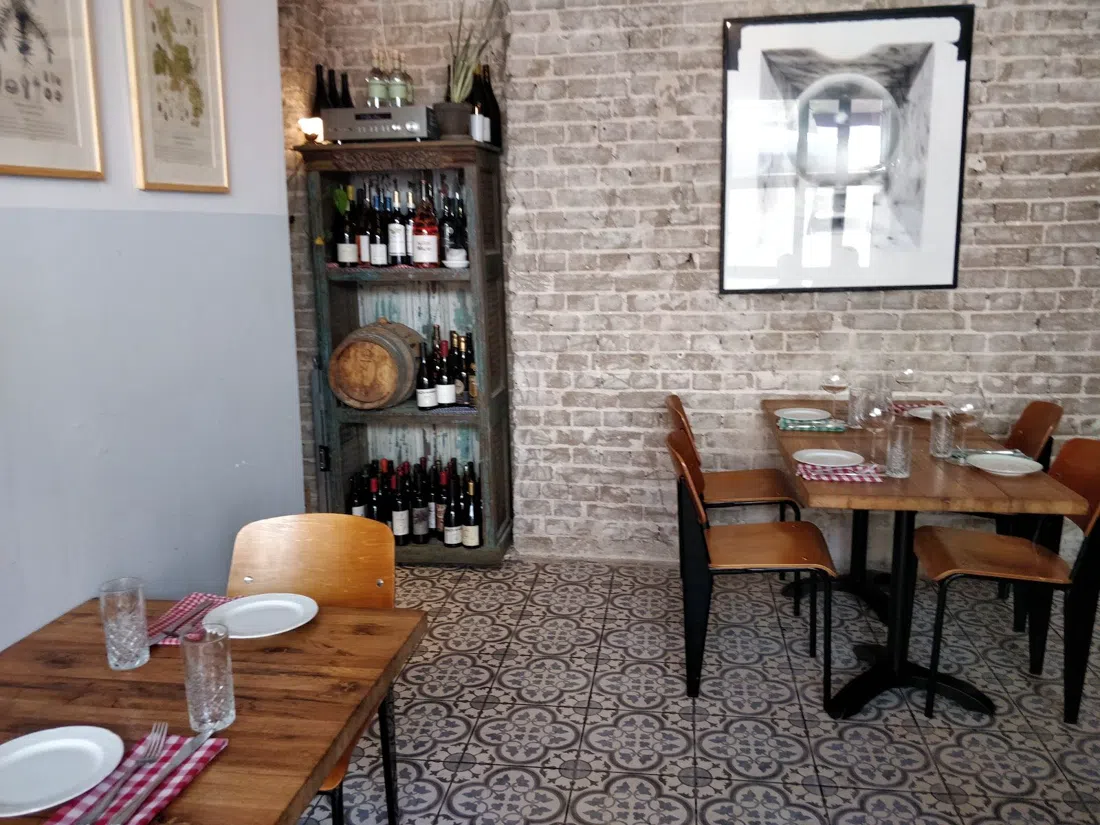
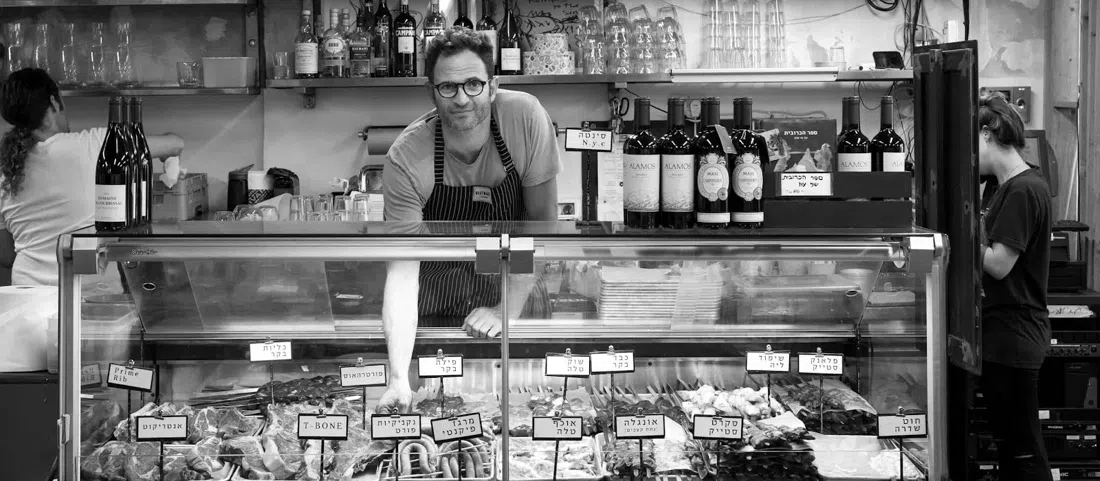
M25, beside its own Meat Market butchery inside the shuk, has been open since 2015 and does the trick nobody else here manages: it closes on Sundays and opens through Saturday, so it trades on the day the market around it is dead. Mains run roughly 90-190 ILS. Afternoon service is walk-in only; dinner takes reservations, and a group should book.
Finishing on sugar, beer or a view
HaMalabia, a takeaway window on HaCarmel Street, is the cheapest and most reliable last stop in the area: a cup of malabi, cold, rose-scented, about 10-20 ILS. There is a dairy-free version and warm sachlav in winter, so a mixed group does not have to negotiate. Everyone eats standing on the street, which works fine.
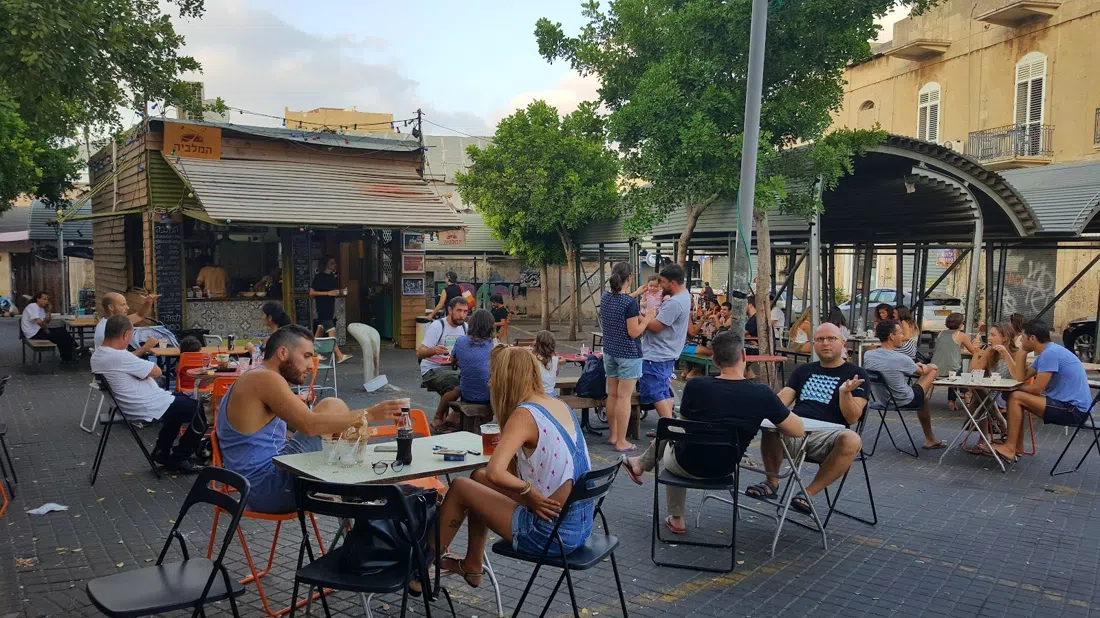
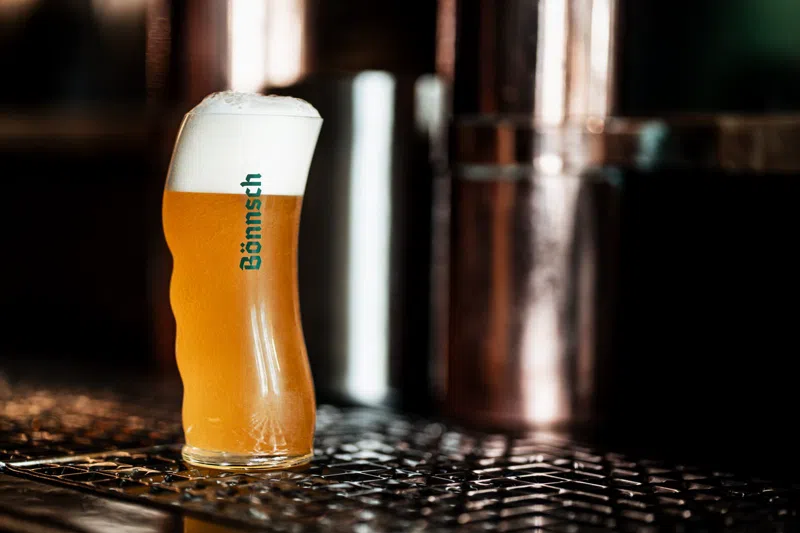
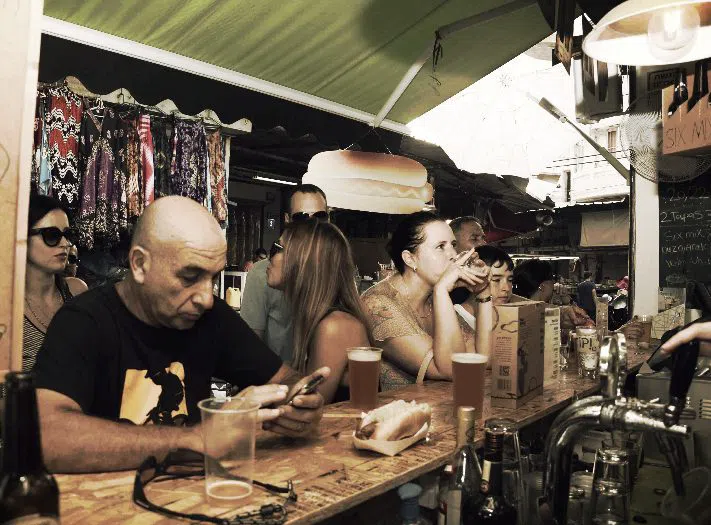
Beer Bazaar Carmel Market, a stand-up bar in the market lane, pours Israeli breweries only, from the Golan down to the Negev. Beers run roughly 25-38 ILS, tasting flights more. No reservations, groups welcome, tastings run on request. The catch is the clock: it is a day bar that shuts around 19:00 and does not open Saturdays. Drink here straight after the walk, not later.
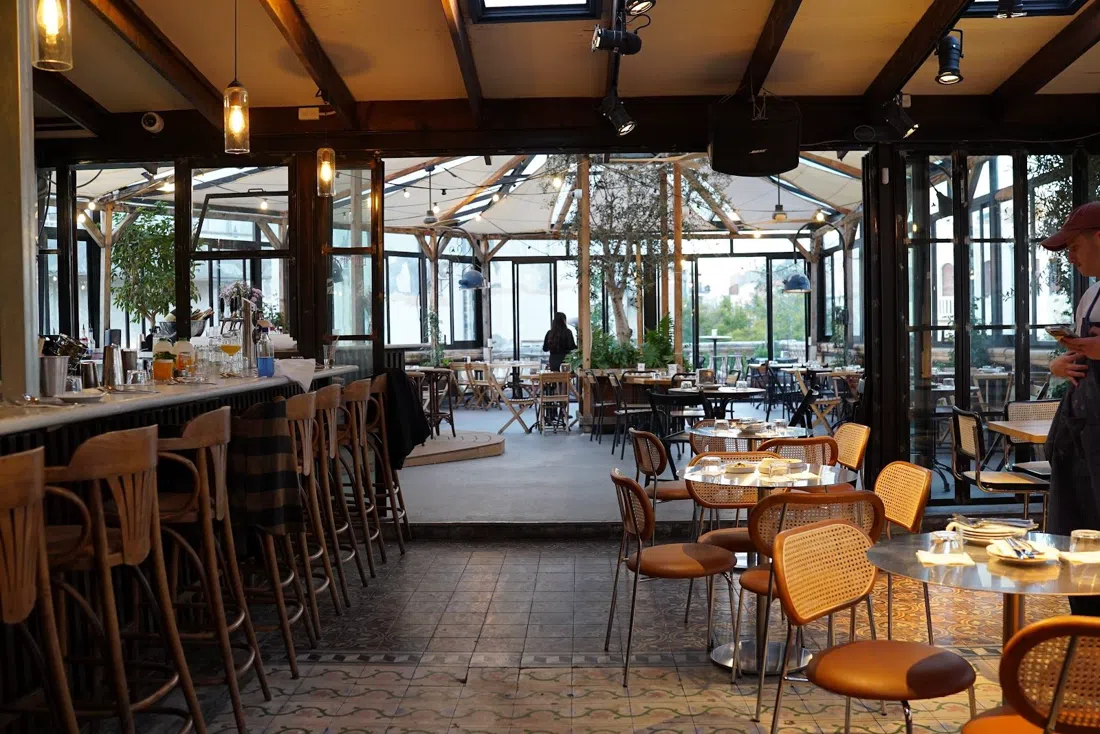
The Prince on Nahalat Binyamin, a minute from the market, is the nearest genuine look-down over the quarter, and after three hours of standing and eating a terrace chair is worth something. Cocktails run roughly 48-70 ILS and small plates 45-80 ILS. Terrace tables are reservation-led, so book for a group; the dress code is casual. It also runs art shows and live music, so check what is on before you plan a quiet drink.
Walking it yourself or walking it with a guide
You can do all of the above with no booking at all. Nothing in the market charges admission and every venue above takes walk-ins at some hour of some day. The honest failure mode of going alone is not getting lost. It is standing in the middle of the lane at 12:30, hot, overwhelmed by twelve stalls selling near-identical pastries, and ending up with the mediocre one because it had the shortest wait.
The guided alternative here is LocaLocal, a small-group operator founded in 2019 by Tal, an anthropologist turned guide, running the Carmel Market and Yemenite Quarter walk. It is 8 to 10 tastings across about three hours, capped around ten people, with private and closed-group departures sold separately. Vegetarian, vegan and kosher-without-teudah eaters are handled on notice, which matters in a quarter where the default plate contains meat. From 145 USD per person, tastings included. The operator confirms bookings by hand, so allow up to 48 hours; you cannot arrange this over breakfast for the same afternoon. It runs six days a week: Monday, Tuesday, Wednesday, Thursday, Friday and Sunday, which mirrors the market's own Saturday shutdown. The same operator runs a separate walk through the spice market to the south.
Best time to go in September
Go early. September in Tel Aviv still carries full summer humidity into the first half of the month, and the market lane traps it under the awnings. Between 08:00 and 10:00 the produce is freshest, the kitchens have just opened, the lane is passable, and you can still taste things rather than just drink water. By 13:00 you are eating hot soup in hot air surrounded by people who are also regretting the timing.
Friday morning is the fullest and loudest the shuk gets, because the whole city is shopping for the weekend: best stock, worst crowding, and the whole thing winds down around 16:00. Tuesday is the quiet win. Nahalat Binyamin Arts and Crafts Fair, the pedestrian mall running alongside the market, opens only on Tuesdays 10:00-17:00 and Fridays 10:00-16:00, plus holiday eves. It is free, crafts start around 40 ILS, and unlike the shuk lanes it comfortably absorbs a group. Pair a Tuesday morning market walk with the fair afterwards and you have the best-scheduled morning in this quarter.

One warning specific to September: the autumn holiday season falls across September and early October, and holiday eves shorten trading hours across the market and the surrounding kitchens without much notice. Check hours for your exact date rather than assuming the standard week.
Is it worth the money
For a first visit, yes, with a condition. What you are buying at 145 USD is not food you could not buy yourself for 120 ILS. You are buying sequencing, access to stallholders who will not otherwise talk to you, and someone who knows which of the two identical-looking hummus counters is coasting. Over about three hours with 8 to 10 tastings, you arrive at dinner already fed and already oriented, and the quarter stops being a wall of noise.
It suits first-timers, solo travellers who want to eat things that come in portions too big for one, cautious eaters who need someone to order for them, and anyone with dietary constraints they would struggle to explain across a counter. It suits confident independent eaters less: if you are happy walking into a cash-only hummusiya at 09:30 and pointing, you will do fine alone and spend a third as much. Couples do well on the small-group format; parties of twelve should book a private departure rather than squeeze into a capped public walk.
When the shuk is shut
Sarona Market, a purpose-built indoor food hall about 25 minutes' walk east, is the Saturday and heat-wave answer. It opens seven days including Shabbat, Sunday to Thursday 09:00-23:00, free to enter, dishes roughly 50-120 ILS. It is polished and commercial rather than authentic, and nobody should pretend otherwise, but it is air-conditioned, it has seating and dietary range, and it is far and away the easiest venue in this article for a large group.
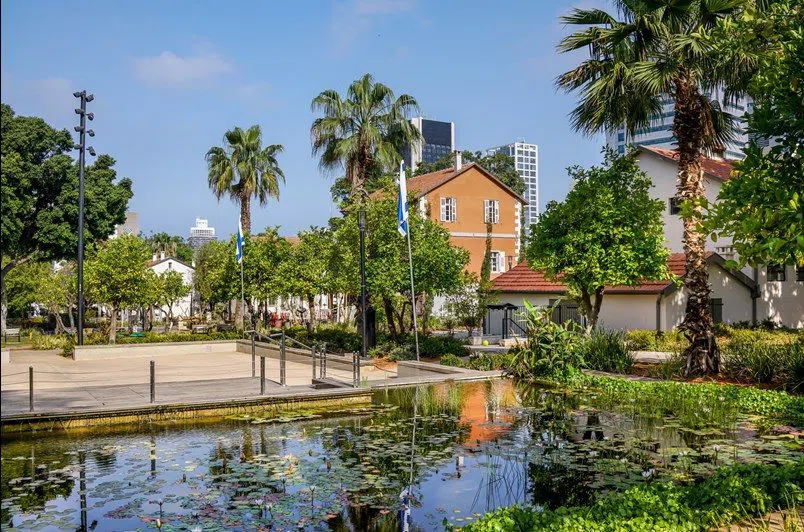
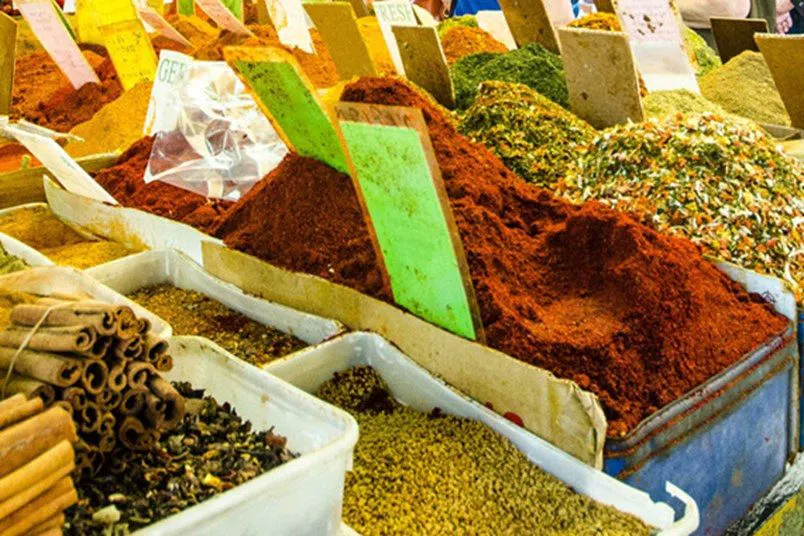
Levinsky Market on Levinsky Street, south of the centre, is the spice market founded by immigrant families from the Balkans, and it is where local cooks actually shop. Free to walk, snacks 15-50 ILS. The shops are one family deep, so you wait your turn. It is the natural second half for anyone who liked the Carmel walk.
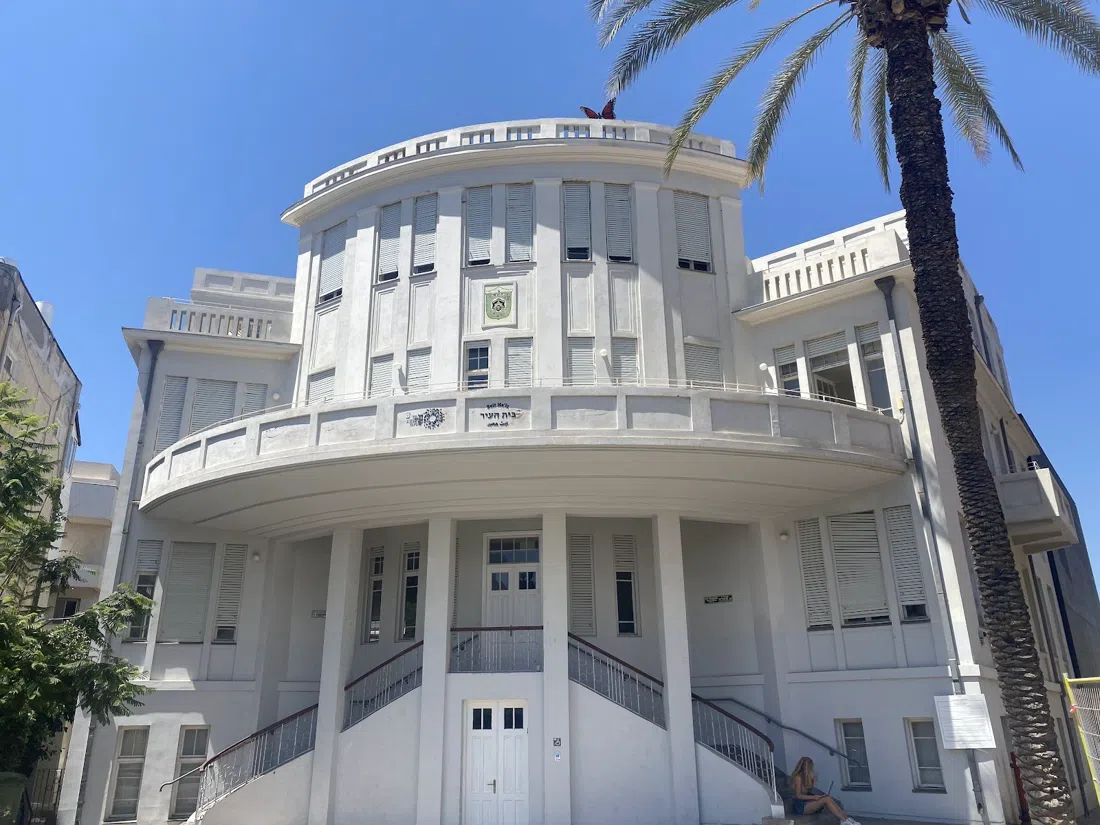
Beit Ha'ir — Tel Aviv City Museum on Bialik Square, a short walk inland, is the indoor context for why a market grew on this spot at all. Renamed the Tel Aviv City Museum in 2023, tickets are modest at roughly 20-30 ILS with concessions, the route through the galleries is set, and organised groups and school parties are taken by arrangement. It is closed Sundays, opens late on Thursday, and keeps short Friday and Saturday hours.
Practical notes
Getting there is easy and walking is the point: the market sits between Allenby and the beach, and almost everything in this article is within a ten-minute walk of the lane except Sarona Market. Base yourself in the centre and you will not need transport at all. Start with a Tel Aviv hotel search for the blocks between the market and Rothschild, and see the wider Tel Aviv guide for the rest of the city.
Carry cash. Shlomo & Doron is cash only, and plenty of stalls prefer notes for small amounts even where cards work. Small denominations move faster at a busy counter.
Timing: arrive between 08:00 and 10:00, accept that most of the veteran kitchens close mid-afternoon, and treat Saturday as a write-off for the market itself. If you want a guided walk, arrange it before you fly, because manual confirmation takes up to 48 hours.
Budget: self-guided, a serious eating morning is 120-200 ILS a head, made up of a hummus plate at 30-45 ILS, a soup at 45-75 ILS, a malabi at 10-20 ILS and a beer at 25-38 ILS. Add a sit-down dinner at HaBasta or M25 and you are at 80-190 ILS for mains before wine. The guided walk starts at 145 USD per person with the tastings included, which for most visitors replaces lunch rather than adding to it.