The Tel Aviv issue
Ruins, Sand and Flat Walks a Short Drive from Tel Aviv
Eleven coastal and inland day trips you can reach in under ninety minutes, with the prices, the door policies and a straight note on which ones work with a group.

By Inês MarquesWalking the White City, Jaffa and everything in between
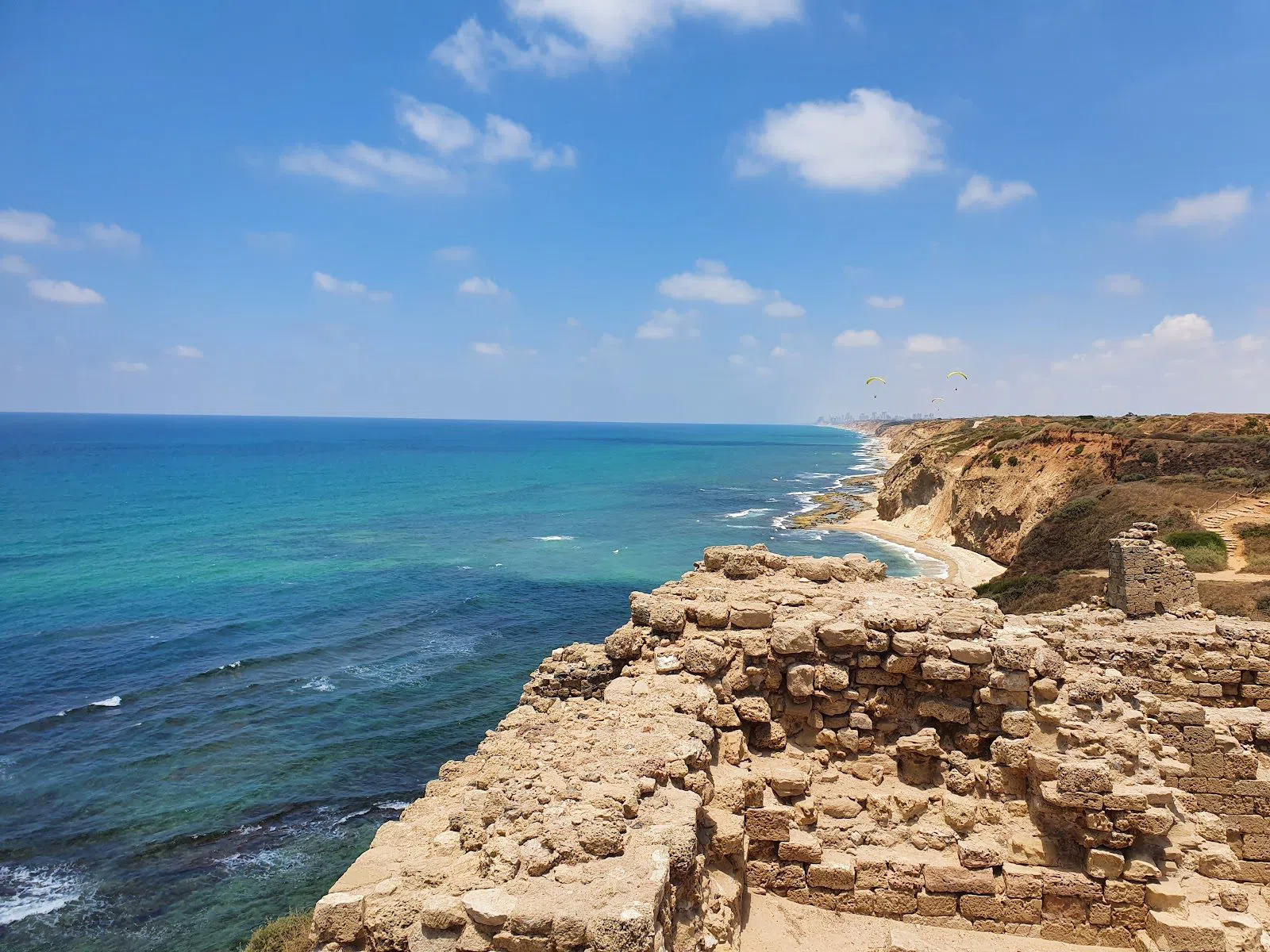
The coast road north out of Tel Aviv stays within sight of the water for most of an hour, and nearly everything worth a spare day sits on it: a Crusader fortress falling into the surf at Arsuf, a Roman harbour still taking waves at Caesarea, a reservoir inland that once fed that harbour's aqueduct. Inland the distances are shorter still. Twenty minutes gets you to a Herodian fort standing over the springs of the river that runs through the city, eighty to a cave city you are allowed to dig in. Most of it needs no booking, none of it needs a tour, and the walking is flatter than people expect.
The ruin you can reach before dinner
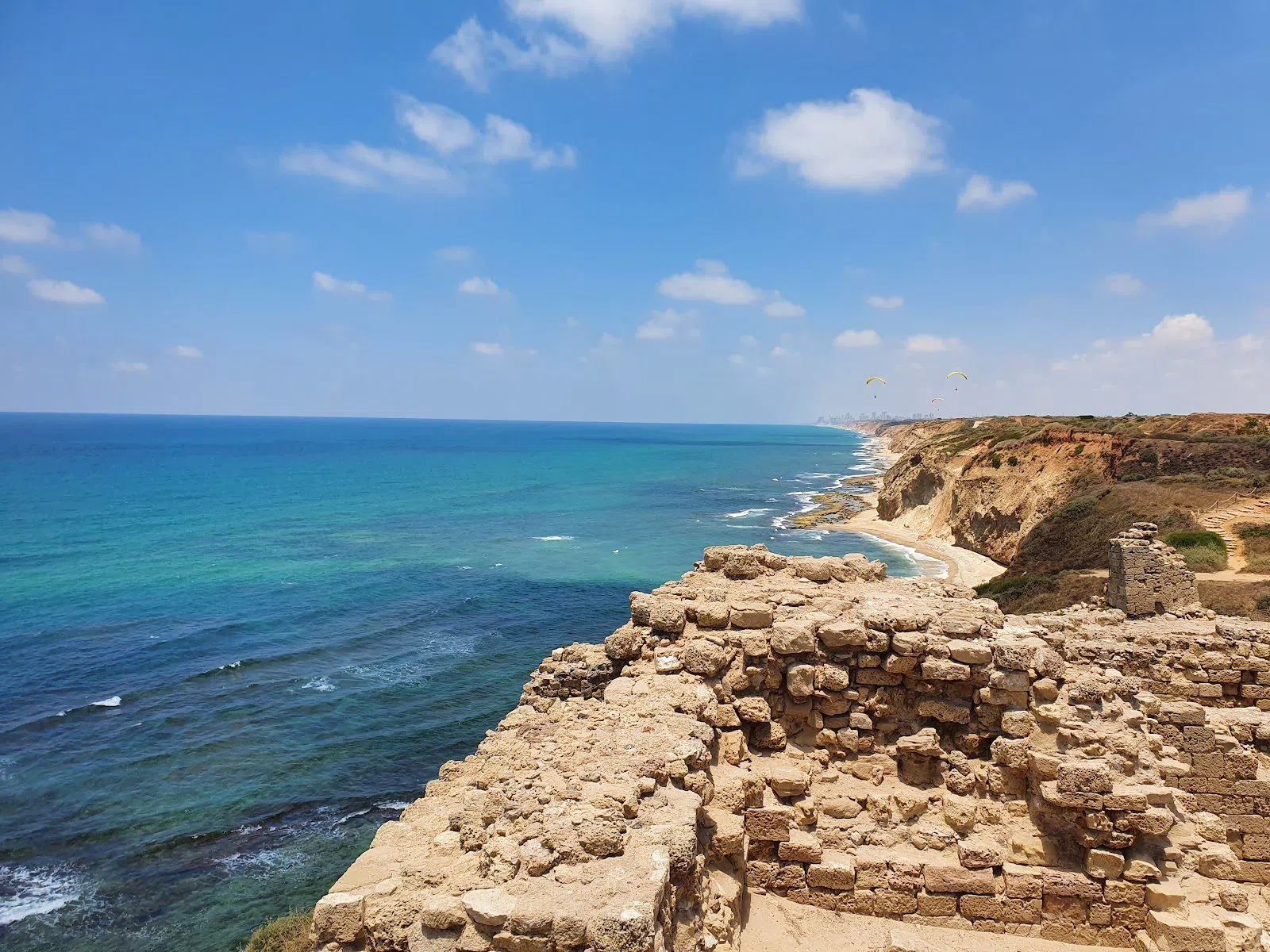
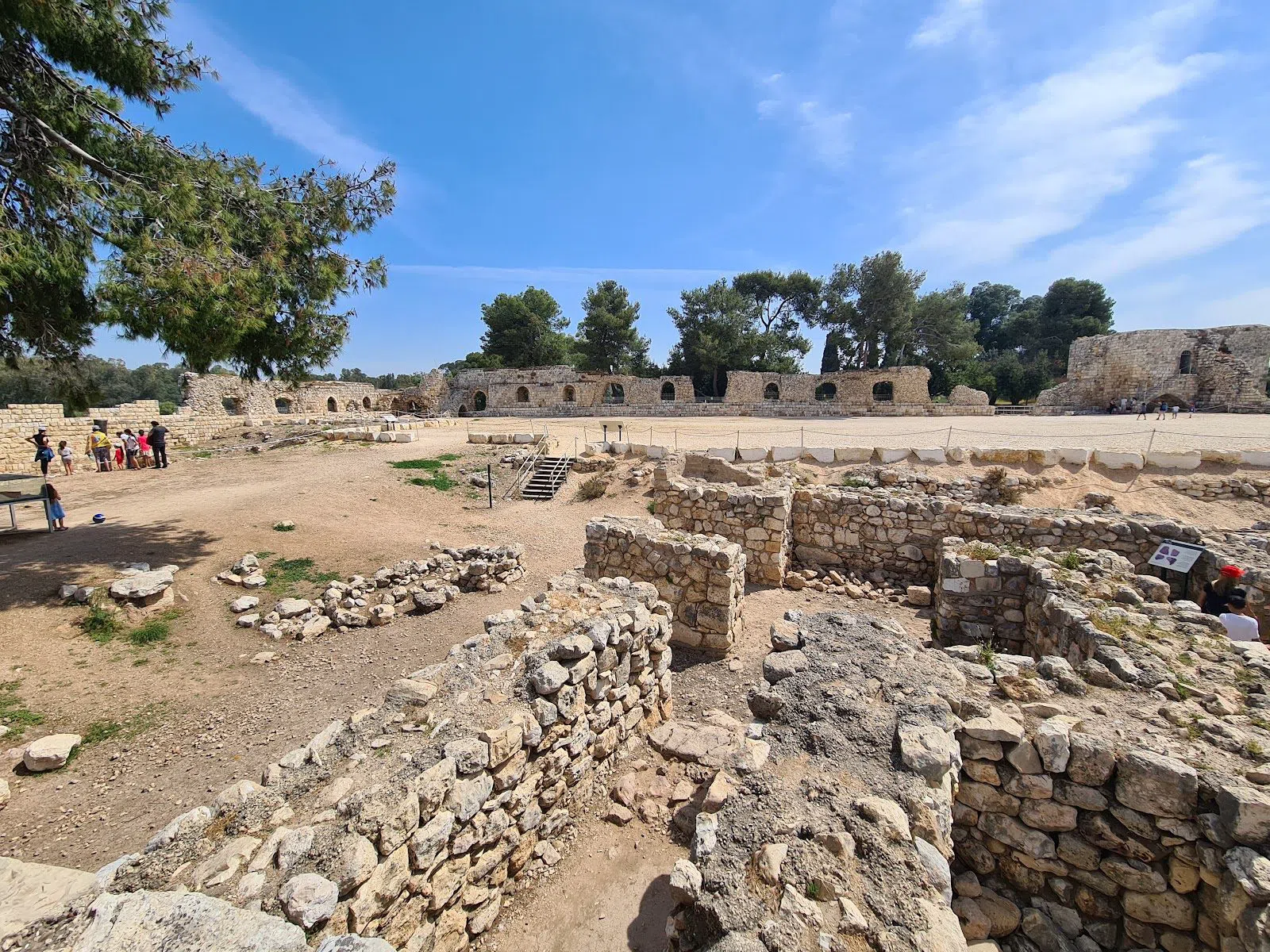
Apollonia National Park (Tel Arsuf, on the cliff edge twenty-five minutes up the coast) is the closest real ruin to the city, and the one I point people to when they have half a day rather than a whole one. From the car park the path runs five or six minutes across open ground before the fortress appears below you: moat, gatehouse, the stub of the keep, then nothing but sandstone bluff and sea. The Romans had a town here; the Crusaders held the castle until 1265 and lost it in a siege you can still read in the broken curtain wall. What you walk through is both versions stacked on each other.
The paths are wide, paved and level enough for a stroller or a wheelchair. That is rarer at Israeli heritage sites than it should be, and it is the practical reason this works for a mixed-ability group: everyone moves together instead of splitting into the fit half and the half that waits at the gate. Walk-ups are fine, groups included, no reservation. An organised party that wants a guide should phone ahead rather than turn up hoping. Entry is ₪20 to ₪30 for an adult and about half that for a child, and it is free on the Israel Nature and Parks Authority multi-park pass, worth buying on your first morning if you intend to do three or more of the sites below.
Come late in the afternoon. The site faces due west, there is almost no shade anywhere on it, and the last hour before closing is when the stone warms up and the light comes off the water instead of straight down. It is open through summer 2026.
Plan your Tel Aviv trip
Live prices from our booking partners.
Free cancellation on many rooms. We may earn a commission when you book.
A full day at the harbour, and the free beach a mile north
Caesarea National Park (the harbour, about forty-five minutes north on Route 2) is the one site on this list that justifies a whole day rather than a morning. You enter near the theatre, walk the hippodrome with the sea on your left, cross Herod's promontory palace where the rock-cut pool still fills at high tide, and finish in the vaulted warehouses behind the harbour. Hours are 08:00 to 17:00 in summer and to 16:00 in winter, with last entry an hour before the gate shuts; the harbour restaurants stay open well past that, so the usual shape of the day is ruins until late afternoon, then fish at a table on the quay. Tickets are ₪46 adult and ₪27 child. If you only want the quay, the harbour-only ticket is ₪14.
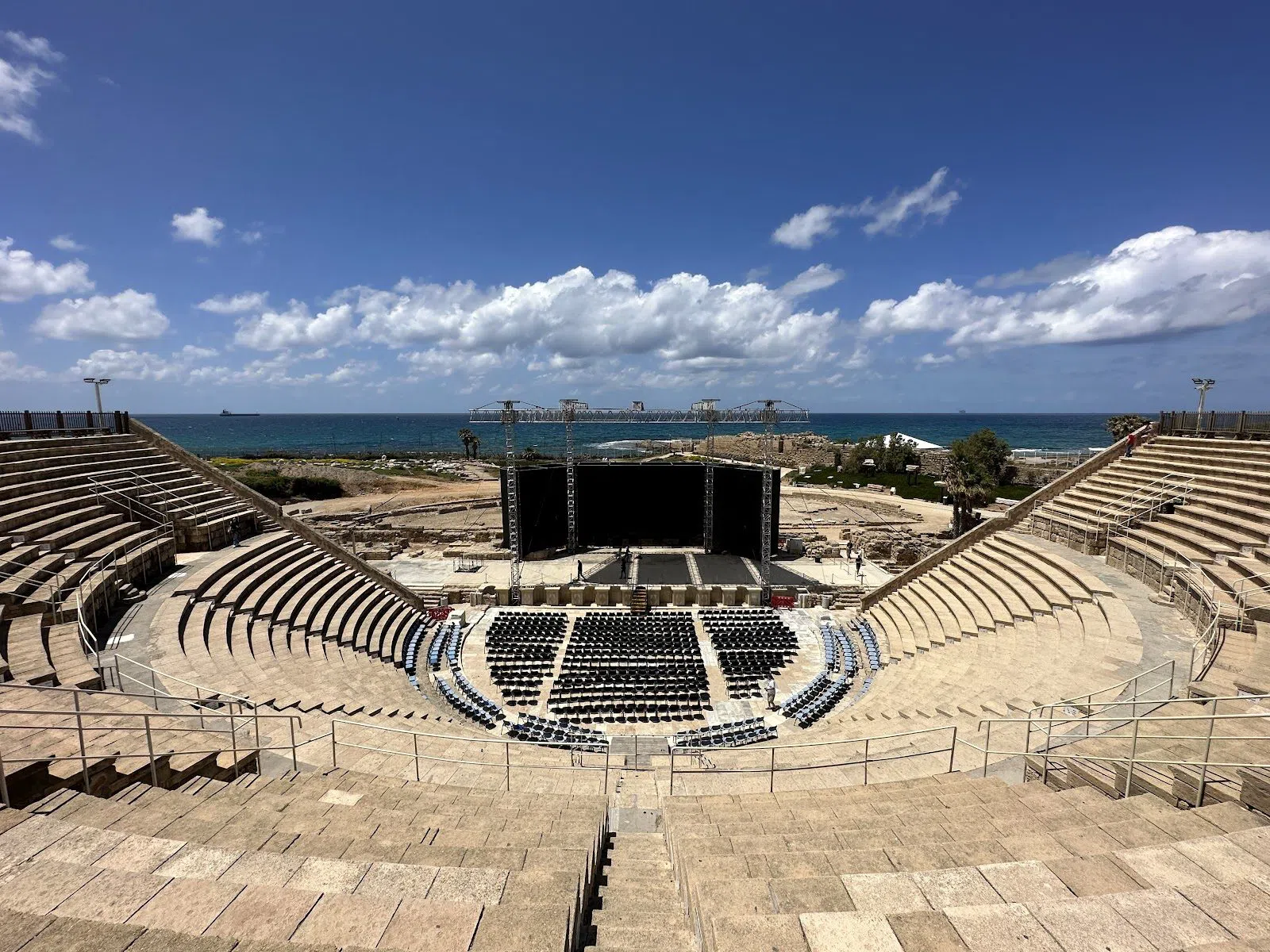
This is a site built for groups. There is coach parking, group ticket pricing, multilingual signage, and harbour restaurants that can seat a large party without fuss. Excellent if you are twenty people, less romantic if you are two, because at midday in high season the theatre fills with tour groups moving as a block. A couple should go early or go late.
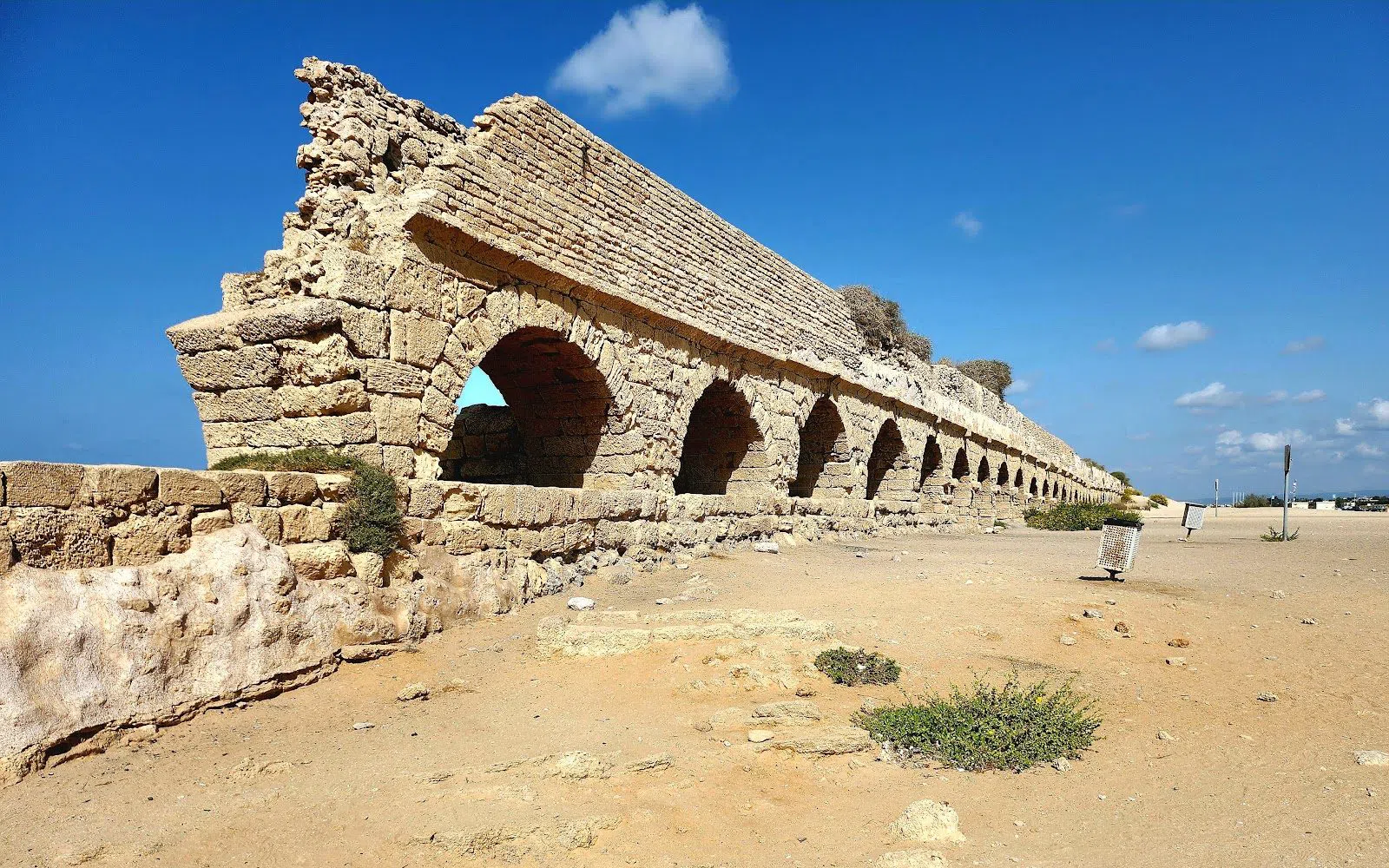
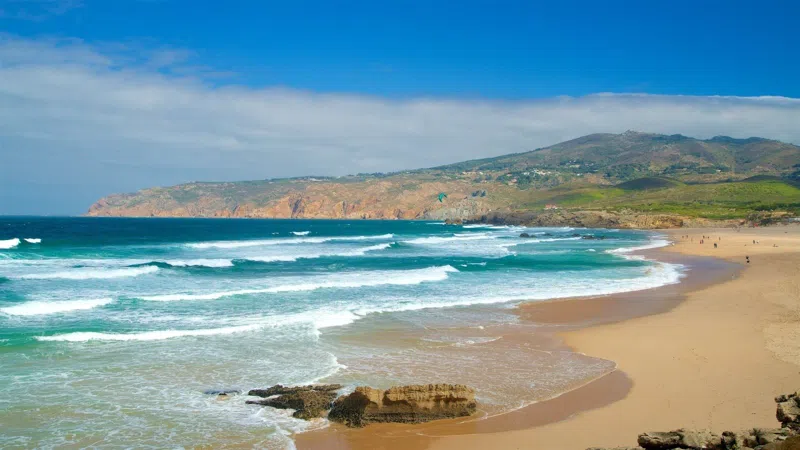
Caesarea Aqueduct Beach (a mile north of the park gate, and entirely separate from it) is free, ungated and unstaffed. The Roman aqueduct runs along the back of the sand on its arches, sometimes with waves breaking under them, and it is the most photographed stretch of this coast. Two warnings, both honest. There is no lifeguard and there is a real undertow here, so treat it as a picnic-and-photographs beach rather than a swimming one; the declared beaches further on are where you swim. And the free parking has very few spaces, so arrive before ten in the morning or after four in the afternoon, or you will be reversing back up a sand track.
Following the water that fed the harbour
Taninim Stream Nature Reserve (Nahal Taninim, ten minutes further north) is the natural second stop on a Caesarea day, because the reservoir and dam here are what supplied the aqueduct you just stood under. The trails are short marked circular loops, flat and genuinely shaded, the easiest walk on this list and the one to choose if somebody in your party has already had enough sun. Independent visitors need no reservation and the loops absorb groups without crowding. Entry is ₪20 to ₪30 adult, roughly half for children.
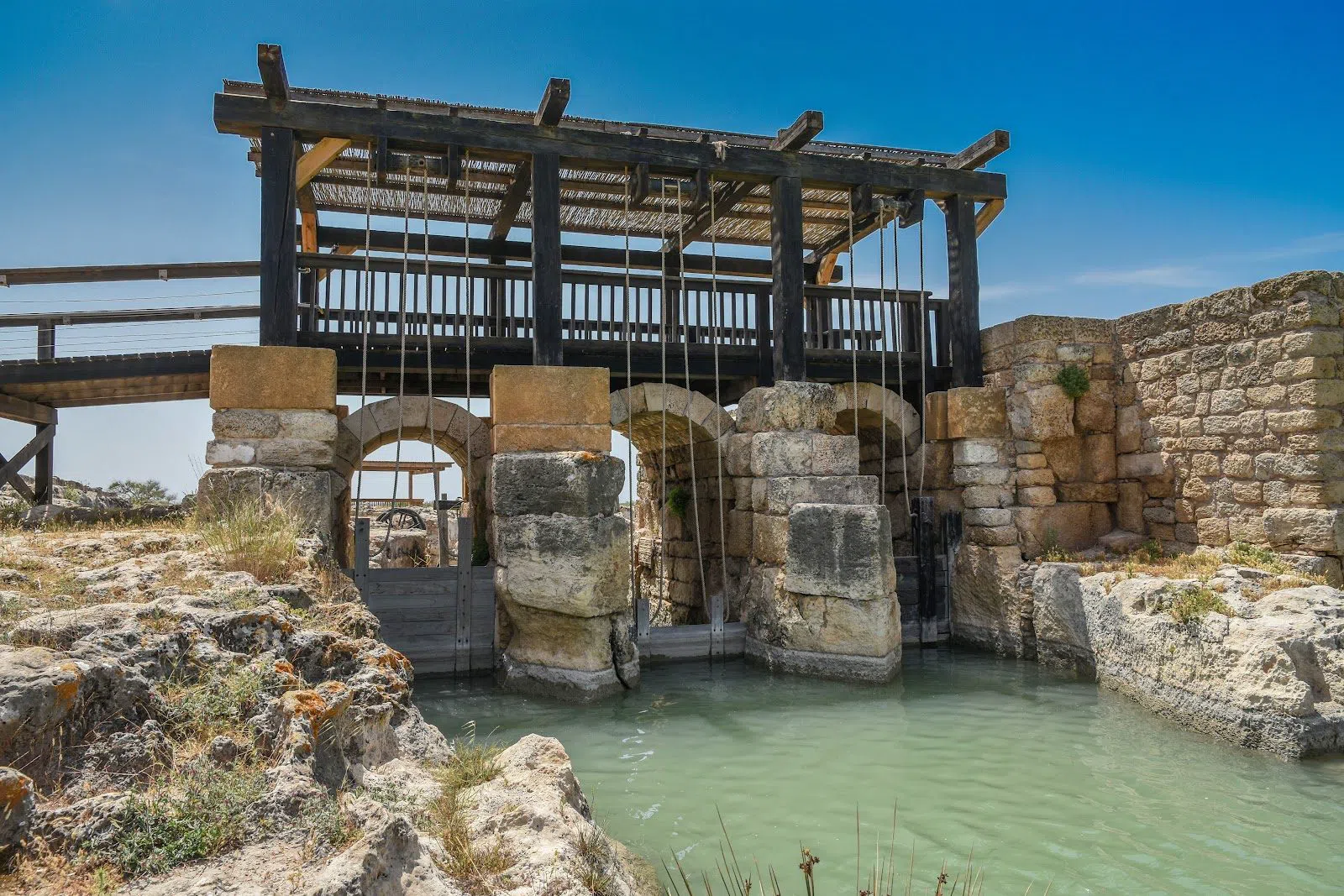
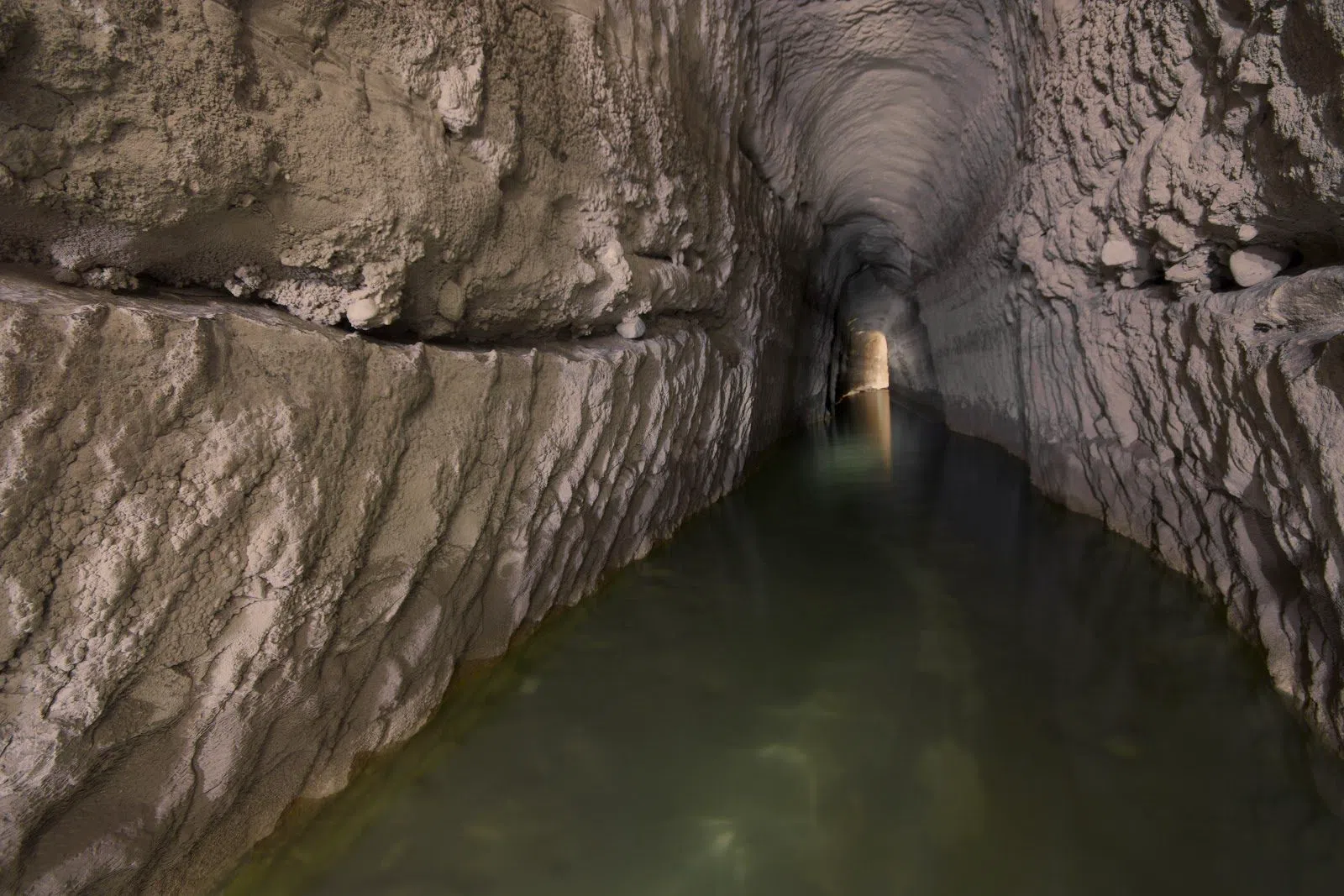
Mey Kedem (Alona Park, in the low hills inland) is the same water system from the inside. You wade the actual Roman tunnel for forty-five to sixty minutes, in water between forty and seventy centimetres deep, with a headlamp and a low roof in places. Tours run in timed slots, so book; ₪49 adult and ₪39 child, or ₪89 combined with the rope park next door. Bring shoes you are happy to soak and a full change of clothes, because you will not be dry afterwards. The operator says plainly that opening hours can shift, so phone the day before. The number, 050-6116422, is the one groups and private events use as well, and they take both. This is the one activity here I would steer away from anyone unsteady underfoot or uneasy in enclosed spaces. Children, in my experience, do not want to come out.
Beaches with something behind the dunes
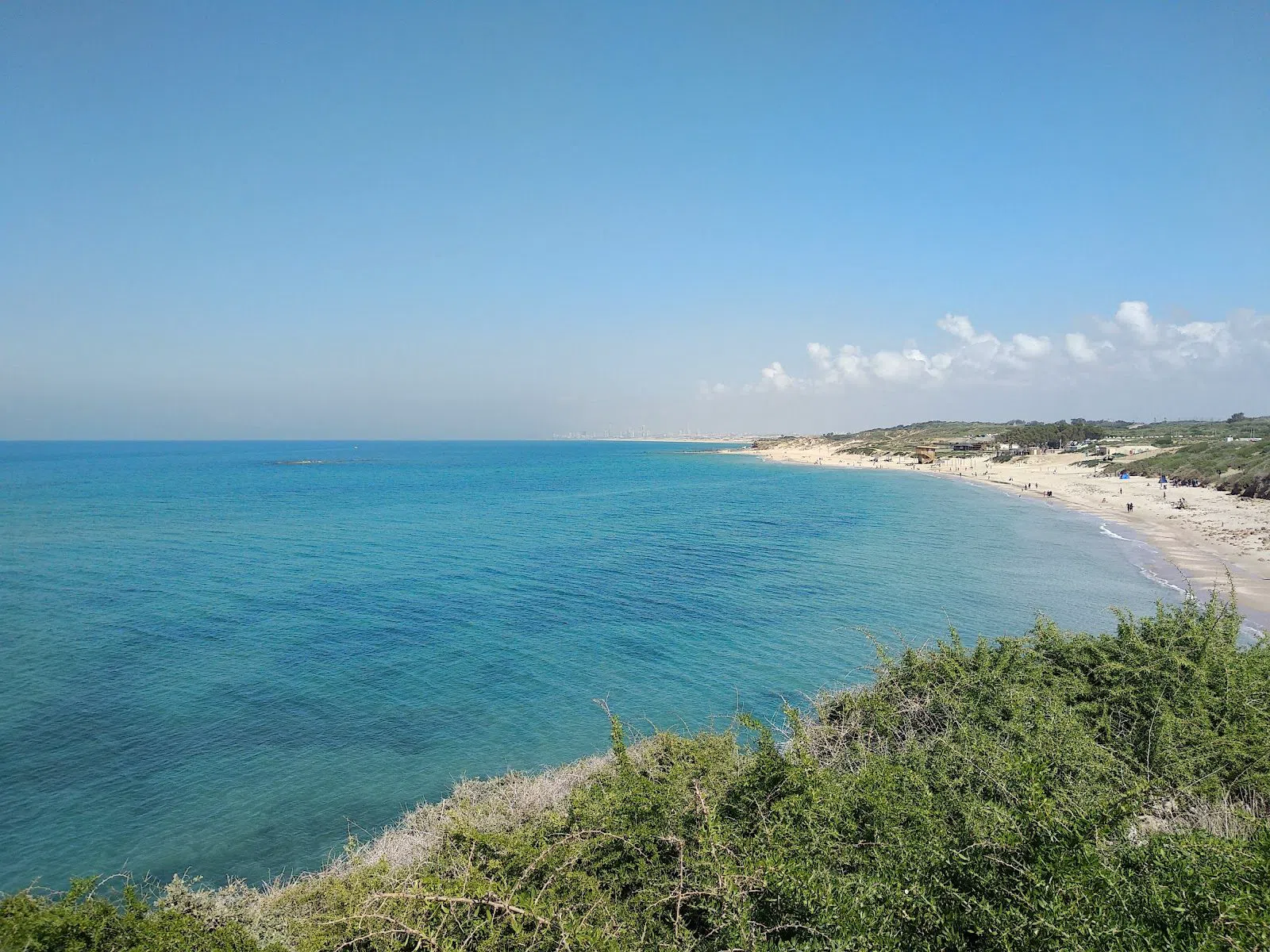
Palmahim Beach National Park (half an hour south of the city) is the rare piece of this coast that was saved from development rather than built over, and behind the dunes sits a Bronze Age port city. You drive in, park on the sand, and find lifeguards in season, shade, picnic tables and chairs for rent. Pricing is per vehicle, ₪25 on weekdays and ₪50 on Saturdays and festival days, which means five people pay what two people pay. Carpool and it becomes the cheapest day out on this list. It is also the best pairing of a swimmable beach and a real ruin within that radius, and it works as well for a couple at seven in the evening as for ten people at noon.
Alexander Stream – Bet Yanai Beach National Park (the Sharon coast, about forty minutes north) is the walk I recommend when somebody says they want a hike but means a stroll. From Turtle Bridge the riverside path runs roughly 3.5 kilometres down to the sea, flat the whole way, no gate and no ticket, passing the ruins of the Samara farmstead before the river meets the sand. The soft-shelled turtles the bridge is named for are the point: they hibernate through winter, so April to October is when you actually see them stacked on the banks. At the far end the declared beach has lifeguards, showers and restaurants, which makes it an easy group lunch. The walk is free; you pay for beach parking.
Twenty minutes out, at the source of the city's river
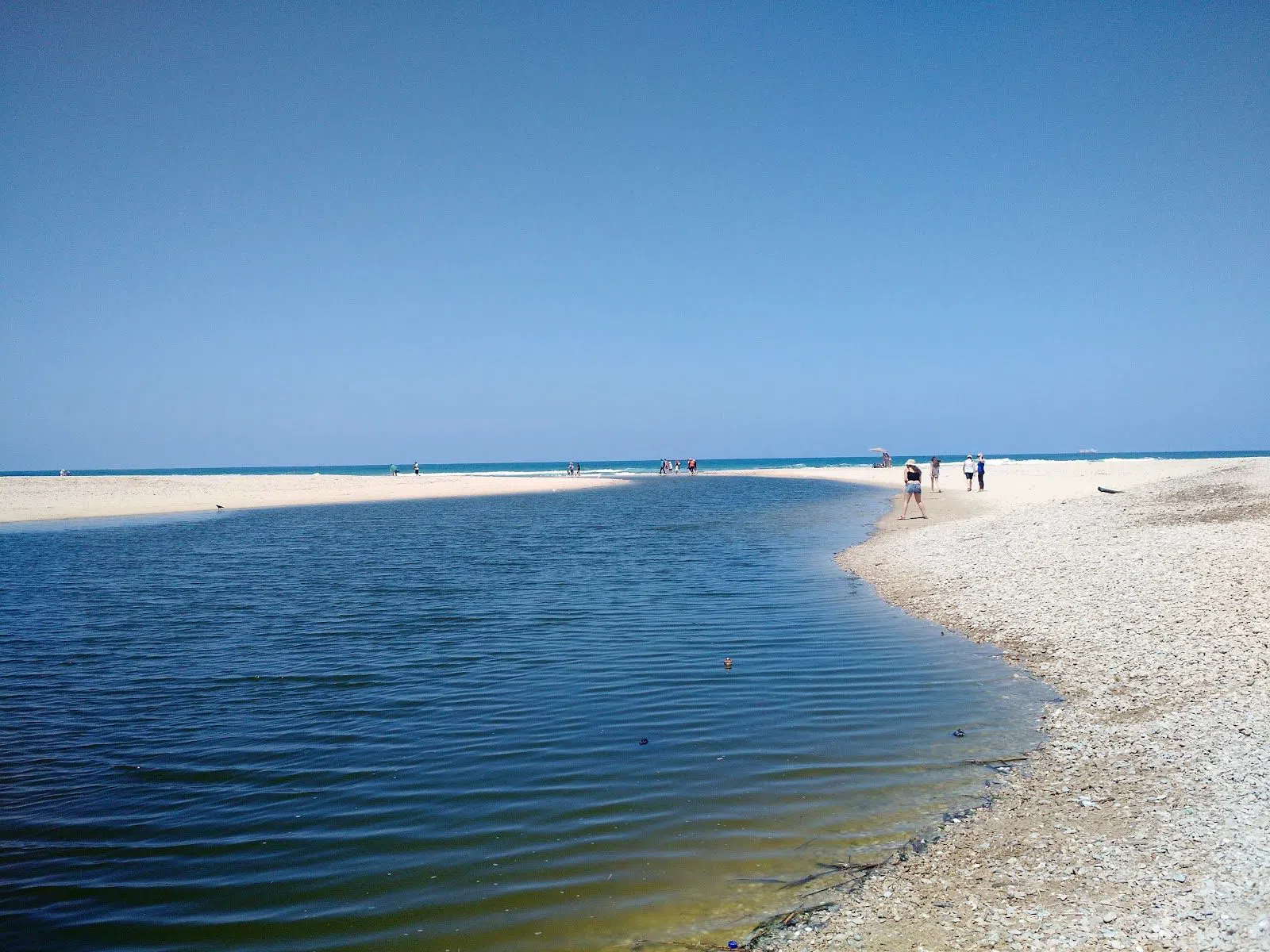
Yarkon National Park – Tel Afek (Antipatris, twenty minutes east) is the trip almost no visitor makes and almost every local family does. Herod built Antipatris on the mound; the Ottomans put a fort on top of it; the springs below are the source of the river that runs through the middle of Tel Aviv and out to the sea. The ground is lawns, picnic areas and a shallow wading pool, it is coach-accessible, and it is the easiest group stop near the city: you can park, eat, climb the fort and be back by early afternoon. Entry is ₪20 to ₪30 adult, about half for children. It closes early, between 16:00 and 17:00 depending on the season, so this is a morning, not an afternoon.
A Carmel day on one tank of fuel
Four stops sit within twenty minutes of each other up the Carmel coast, and they make the fullest day on this list after Caesarea.
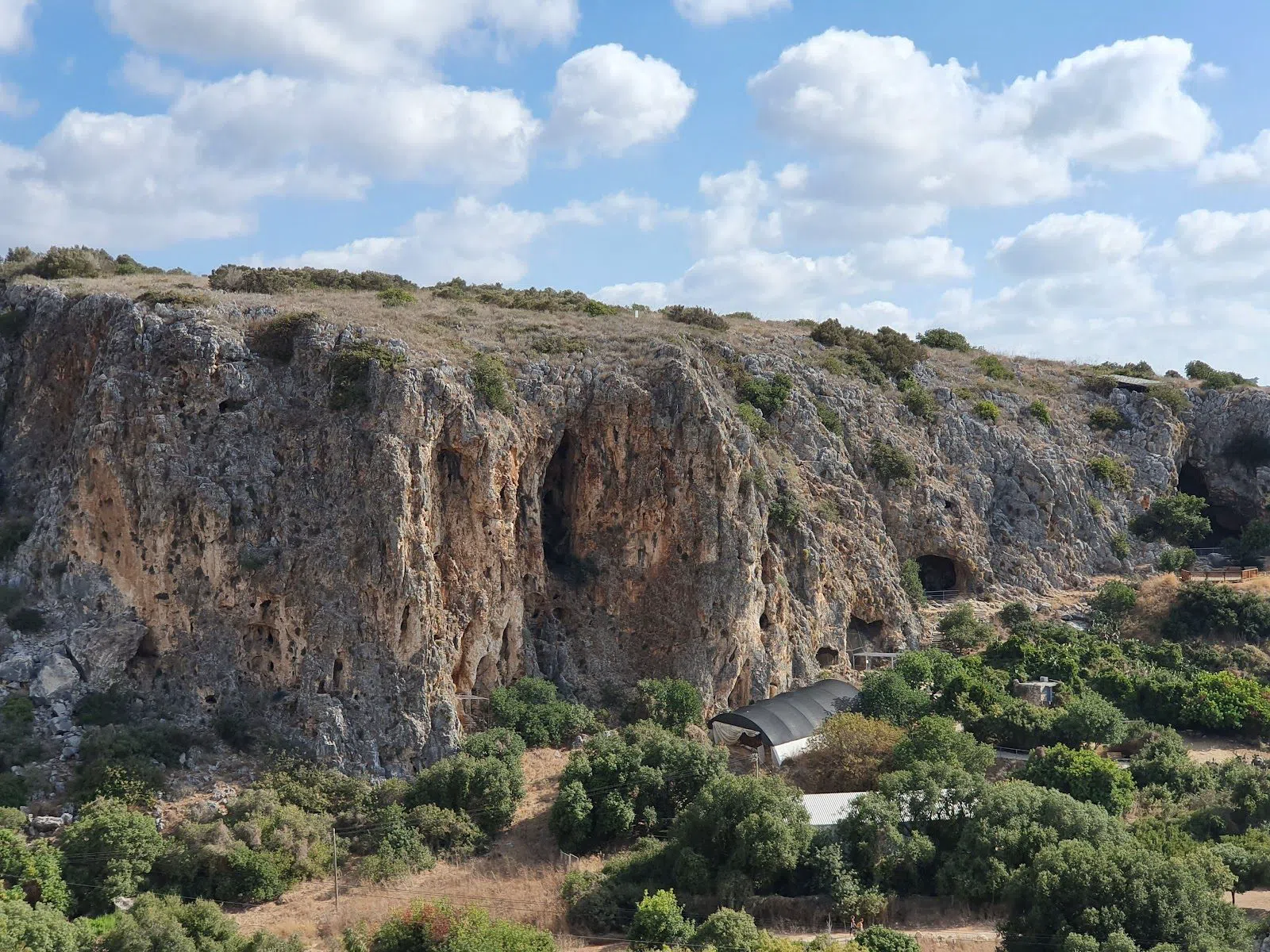
Nahal Me'arot Nature Reserve (the Carmel foothills, just off the coast road) is UNESCO-listed for half a million years of continuous human occupation, including the layers where Neanderthals and early modern humans overlap. There is a visitor centre, a film, picnic benches and ample parking; the marked trail through the caves takes under an hour and is unusually well explained in English, which is not always true of Israeli reserves. Tickets are ₪22 adult, ₪9 child, ₪11 senior, and the setup handles groups without strain.
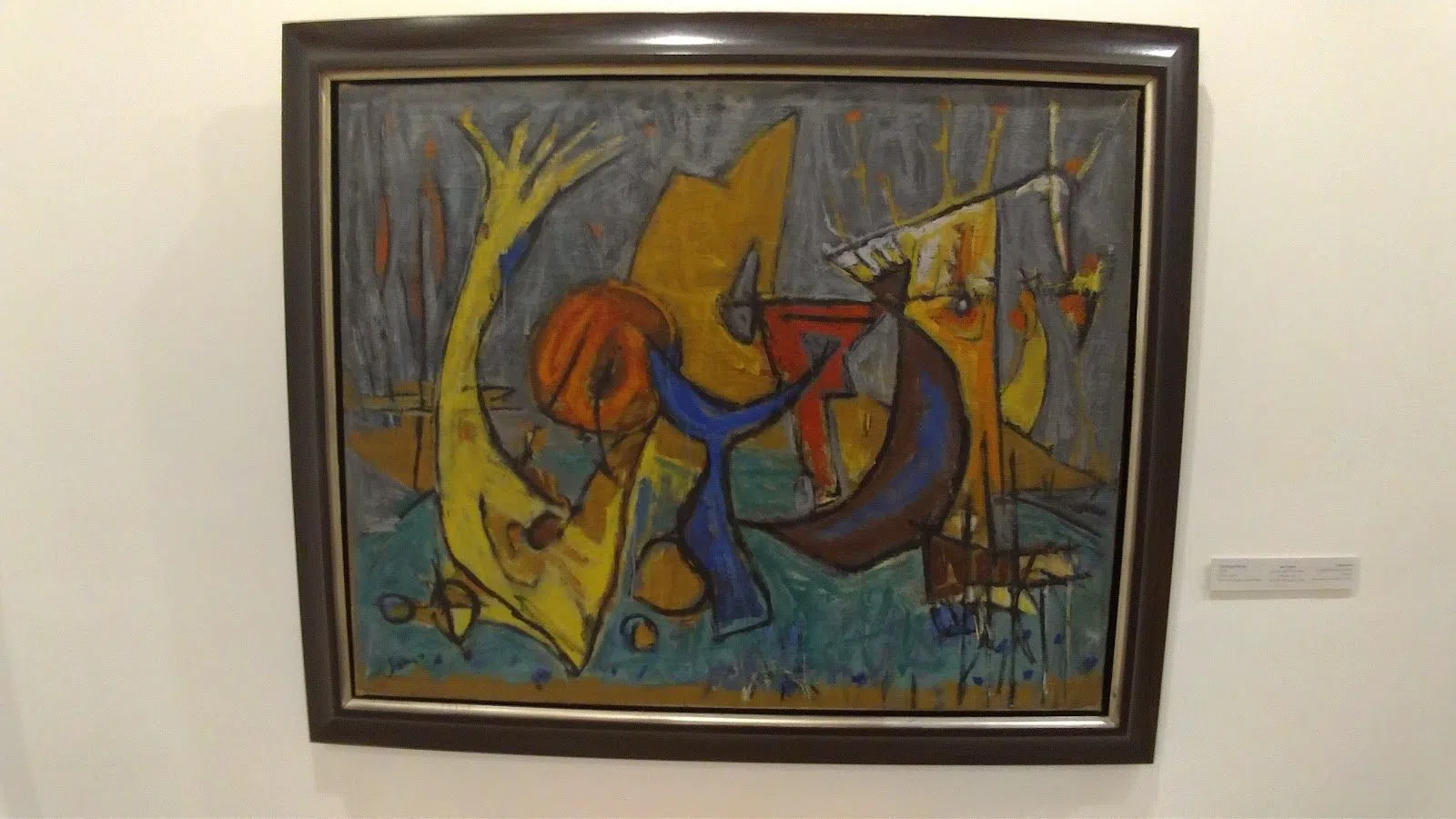
Ein Hod Artists' Village (ten minutes inland, home of the Janco Dada Museum) is the right lunch stop afterwards: eighteen galleries, working studios you can look into, and Dona Rosa on the square. The museum is ₪28 adult and ₪14 concessions, open Monday to Saturday 11:00 to 14:00 or by arrangement, and it runs guided tours in English, Hebrew, Arabic and Russian by booking, plus events for up to a hundred people. Individual galleries keep their own hours, so a group should call ahead rather than hope; the DadaLab workshop space is temporarily closed.
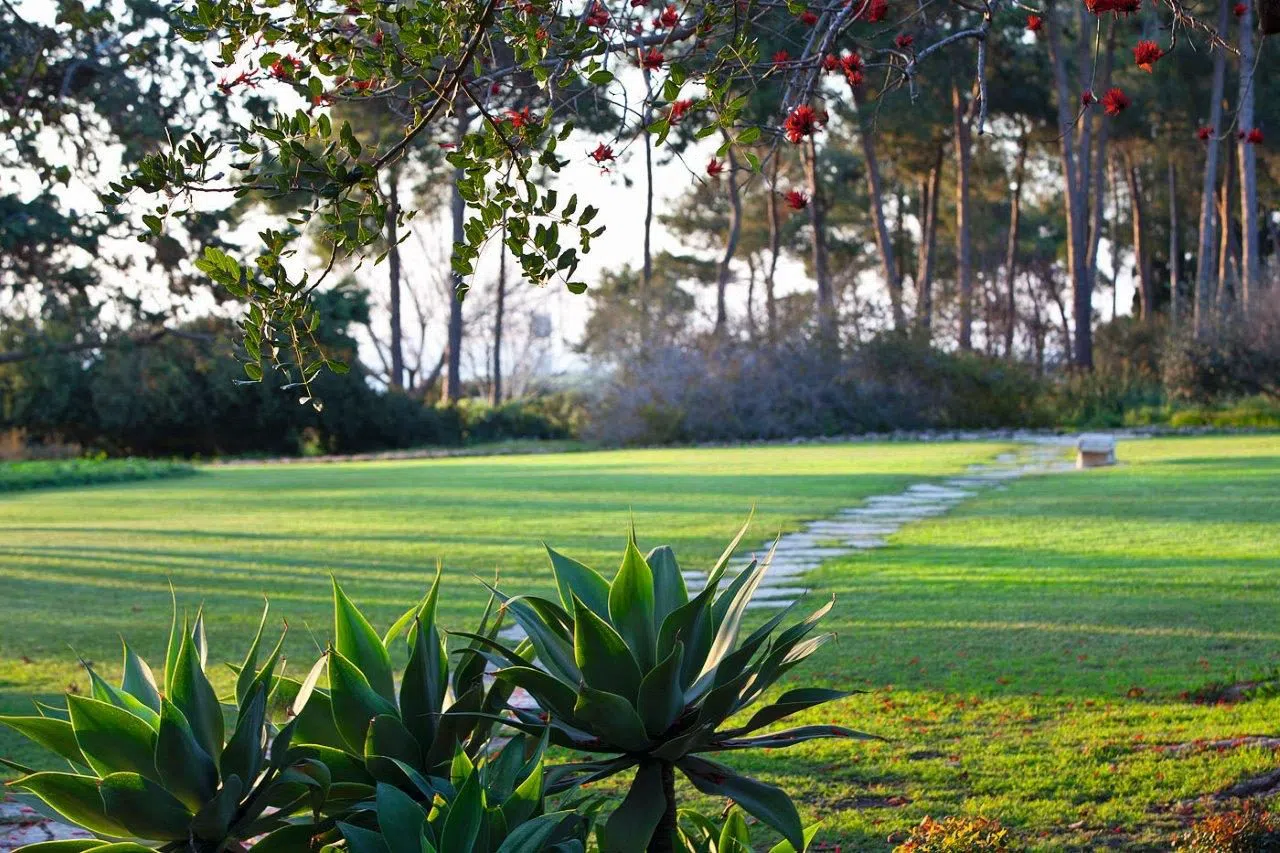
Ramat Hanadiv (the ridge above the coastal plain) is free to enter, which for formal gardens of this standard is unusual. Clipped paths and a crypt on top, wild Carmel trails dropping away below, wheelchairs available to borrow and a restaurant on site. Parking is ₪25 a day. Hours split oddly: 08:00 to 16:00 on Sunday, Wednesday and Friday, and until half an hour after sunset on Monday, Tuesday, Thursday and Saturday. Take one of the long days. The crypt is closed on Saturdays. Large groups should contact the visitor centre in advance for guiding.
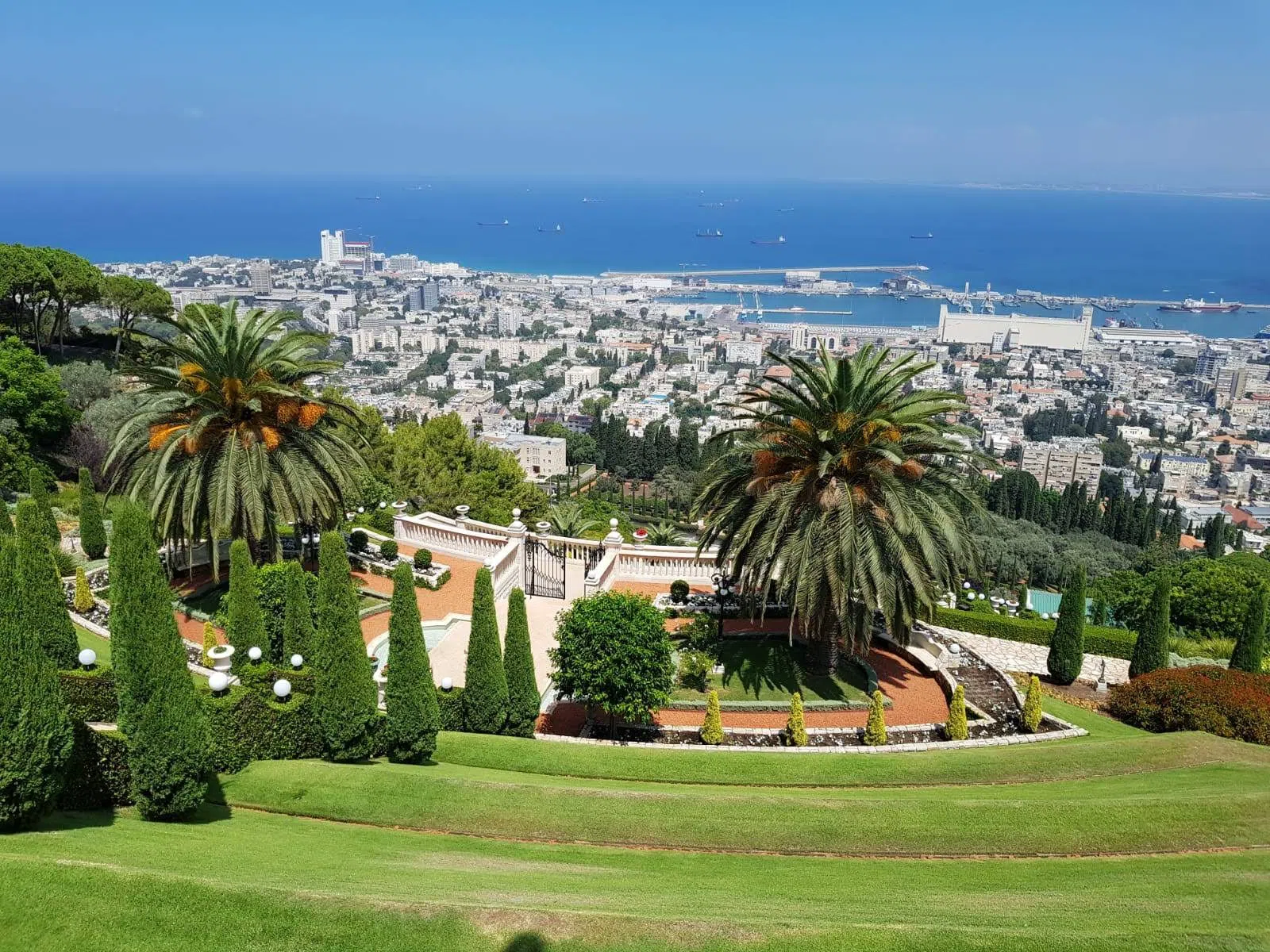
Bahá'í Gardens, Haifa (the terraces above the port) finish the day. Free, immaculately kept, and the view down the terraces to the bay is the one northern viewpoint I would queue for. Self-guided viewing is 09:00 to 17:00 daily, the shrine 09:00 to 12:00, and shoulders and knees must be covered, so plan your clothes before you drive. Guided tours run Tuesday to Sunday by reservation, with separate booking tracks for parties up to nineteen and advance requests for twenty or more. One caveat for mixed groups: the upper-terrace tour is 750 steps down, and that is not a walk everybody in your party will want.
The caves you are allowed to dig in
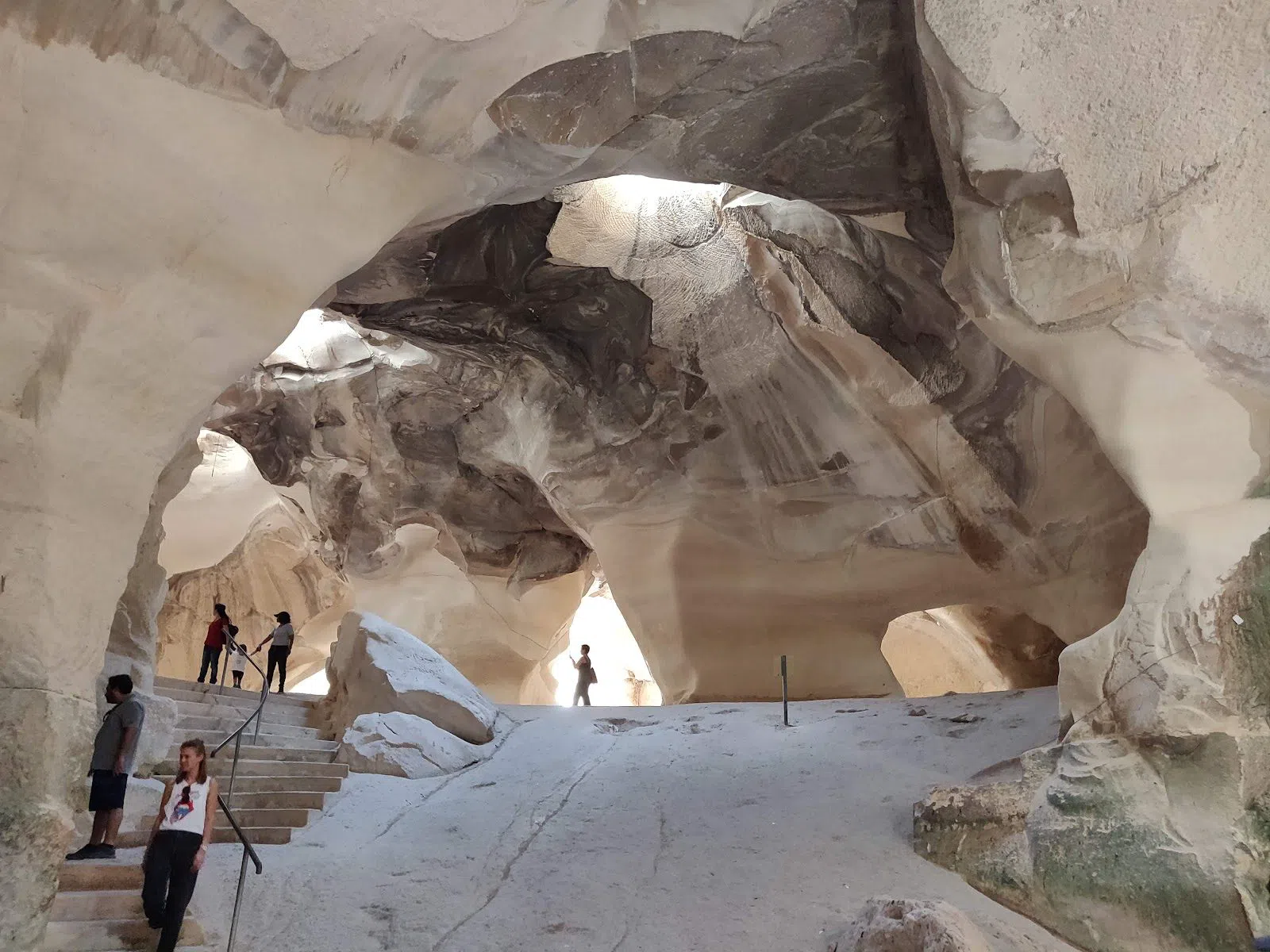
Beit Guvrin–Maresha National Park (the Judean lowlands, about eighty minutes south-east) is UNESCO-listed for a cave city quarried out of soft chalk: bell caves, columbaria, olive presses, a whole second town under the first. The park itself is ₪20 to ₪30 adult, but the reason to drive out here is Dig for a Day, which puts you in an unexcavated cave for three hours with a real archaeologist under Israel Antiquities Authority supervision. You sift, you find, you hand everything over. You keep nothing but the story. It is ₪95 adult and ₪72 child, and private group excavations run ₪1,560 for up to twelve or ₪2,640 for up to twenty, with English guiding, Sunday to Friday, booked through digforaday.com. Of everything here, this is the one that holds teenagers.
The day trip that works with no car at all
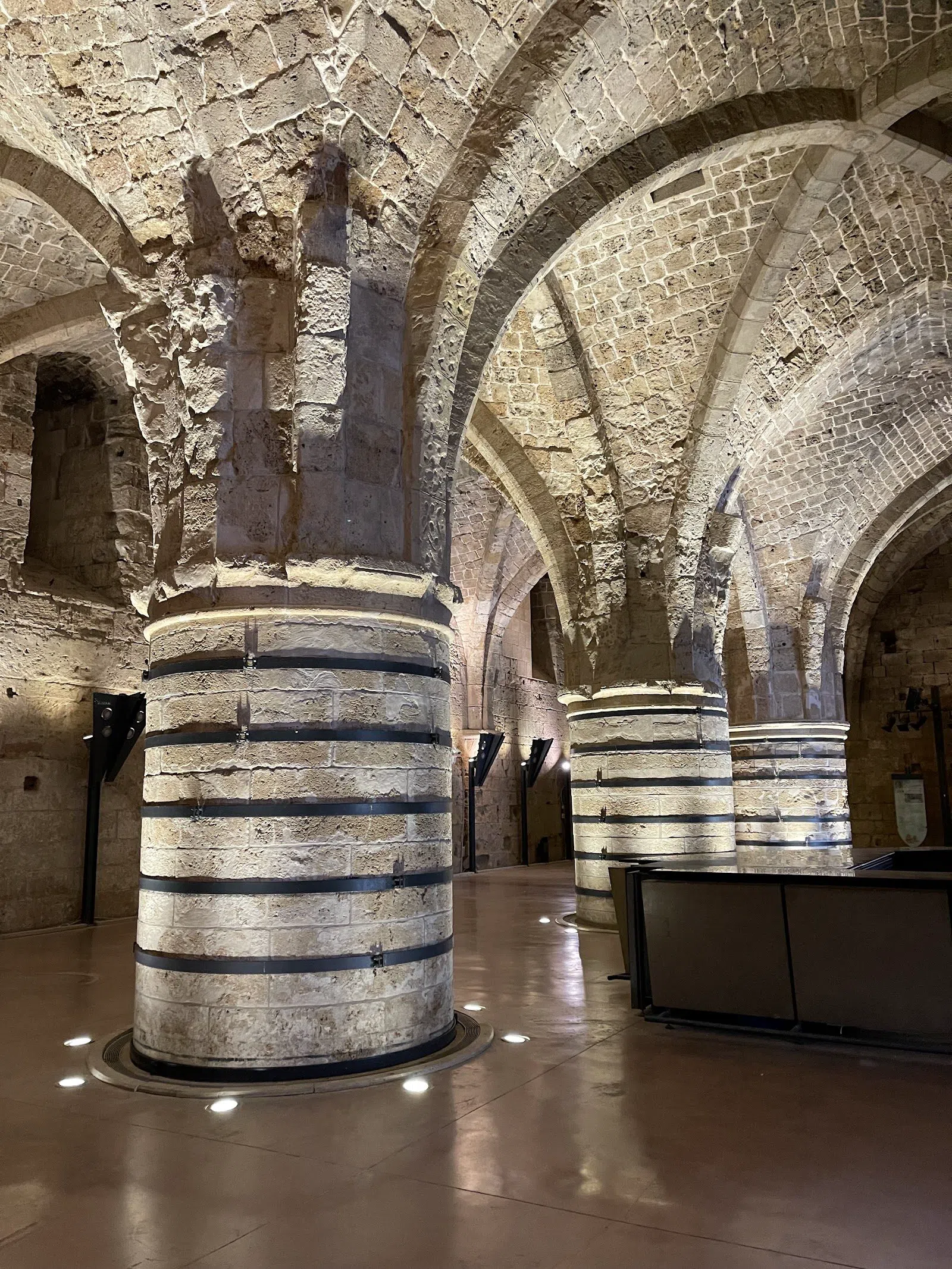
Old Acre (Akko), with the Hospitaller Fortress and the Templars' Tunnel, is the trip to take if you are not driving at all. A direct train leaves Tel Aviv Centre roughly hourly and takes about 1h40, ₪45 to ₪60 return, and bus 3 or 4 covers the last mile to the walls. Inside, you descend through the Crusader halls, walk the tunnel under the old city, and come up in a souk and a line of fish restaurants that absorb large parties easily. The combined ticket starts at ₪49 and is sold at group rates. Open 09:00 to 18:00 in summer, to 17:00 in winter.
If you are not driving
Abraham Tours (now trading as Abraham Tlalim Tours after the merger, though everyone still books it under the old name) runs small mixed groups with English guiding, at ₪150 to ₪490 per person for a day tour, with private and custom group tours bookable and 10% off for hostel guests. It is the practical answer for the desert and the Dead Sea, where public transport is genuinely awkward. For the coastal sites on this list the maths goes the other way: a rental car split three ways, or the train to Akko, is cheaper, and it gives you the late afternoon light the coaches are never there for.
Practical notes
A rental car for two or three days covers everything above and is the only way to do the Carmel cluster or Mey Kedem in one go. Trains are fast and frequent along the coast and reach Akko, Caesarea's nearest station and Haifa directly; Apollonia is under an hour by bus plus a short walk. Trains and most buses stop from Friday afternoon until Saturday evening, so Saturday is a driving day or a walking day.
Everything here quotes shekels. Park entry sits at ₪20 to ₪30 a head for the smaller sites and ₪46 for Caesarea, and the INPA multi-park pass pays for itself at three sites, so buy it at the first gate. Cards work at national park gates and harbour restaurants; carry some cash for the village galleries and beach parking.
Morning for Tel Afek and the aqueduct beach parking; late afternoon for Apollonia and Palmahim; book Mey Kedem and the Bahá'í tours ahead. Most national parks shut their gates between 16:00 and 17:00 in winter, which comes as a surprise to anybody used to long European evenings.
Two people with a car can do a full Caesarea day, park and aqueduct beach and Taninim, for about ₪160 in tickets plus fuel. A family of four doing Beit Guvrin with the dig lands near ₪340. Palmahim and Ramat Hanadiv are the cheap days, and the Bahá'í terraces cost nothing at all.
For where to sleep between trips, start with the Tel Aviv hotel search. Anywhere near the Savidor Centre station makes the train days painless, and the Tel Aviv guide covers the evenings you come back to.
Before you go
Can I do these day trips from Tel Aviv without a car?
Some of them. Old Acre is the easiest: a direct hourly train from Tel Aviv Centre, about 1h40 and ₪45 to 60 return, then bus 3 or 4. Apollonia is under an hour by bus plus a short walk, and the coastal railway also reaches Caesarea's nearest station and Haifa. The Carmel cluster and Mey Kedem realistically need a car, or a guided day with an operator like Abraham Tours at ₪150 to 490 per person.
Which day trip is best if someone in the group can't manage steps or rough ground?
Apollonia National Park. Its paths are paved and level enough for a stroller or wheelchair, so the whole party stays together. Taninim Stream Nature Reserve is next, with short flat loops under shade. Ramat Hanadiv lends wheelchairs at the visitor centre. Avoid the Bahá'í upper-terrace tour, which is 750 steps, and skip Mey Kedem, where you wade a Roman tunnel in water that reaches knee to waist height.
Is the Caesarea Aqueduct Beach safe for swimming?
No. It is free and ungated, with no lifeguard and an undertow, so treat it as a beach for picnics and photographs. For swimming, use the declared beaches: Palmahim Beach National Park, or Bet Yanai Beach at the end of the Alexander Stream walk. Both have lifeguards in season, showers and food.
Is the Israel Nature and Parks Authority multi-park pass worth buying?
If you plan three or more sites, yes. Individual entry runs ₪20 to 30 at the smaller parks and ₪46 at Caesarea, so the pass pays for itself quickly. It covers Apollonia, Taninim, Tel Afek, Palmahim, Beit Guvrin and Caesarea. Buy it at the first gate you reach. It does not cover Mey Kedem, the Dig for a Day programme or the Janco Dada Museum.
What should I book ahead and what can I just turn up to?
Book Mey Kedem's timed tunnel slots and phone the day before, since hours shift. Bahá'í guided tours need booking too (separate tracks for parties up to 19 and 20-plus), as does Beit Guvrin's Dig for a Day, which runs Sunday to Friday. Everything else takes walk-ups, including groups, though organised parties wanting a guide should call Apollonia, Ramat Hanadiv or the Ein Hod galleries in advance.