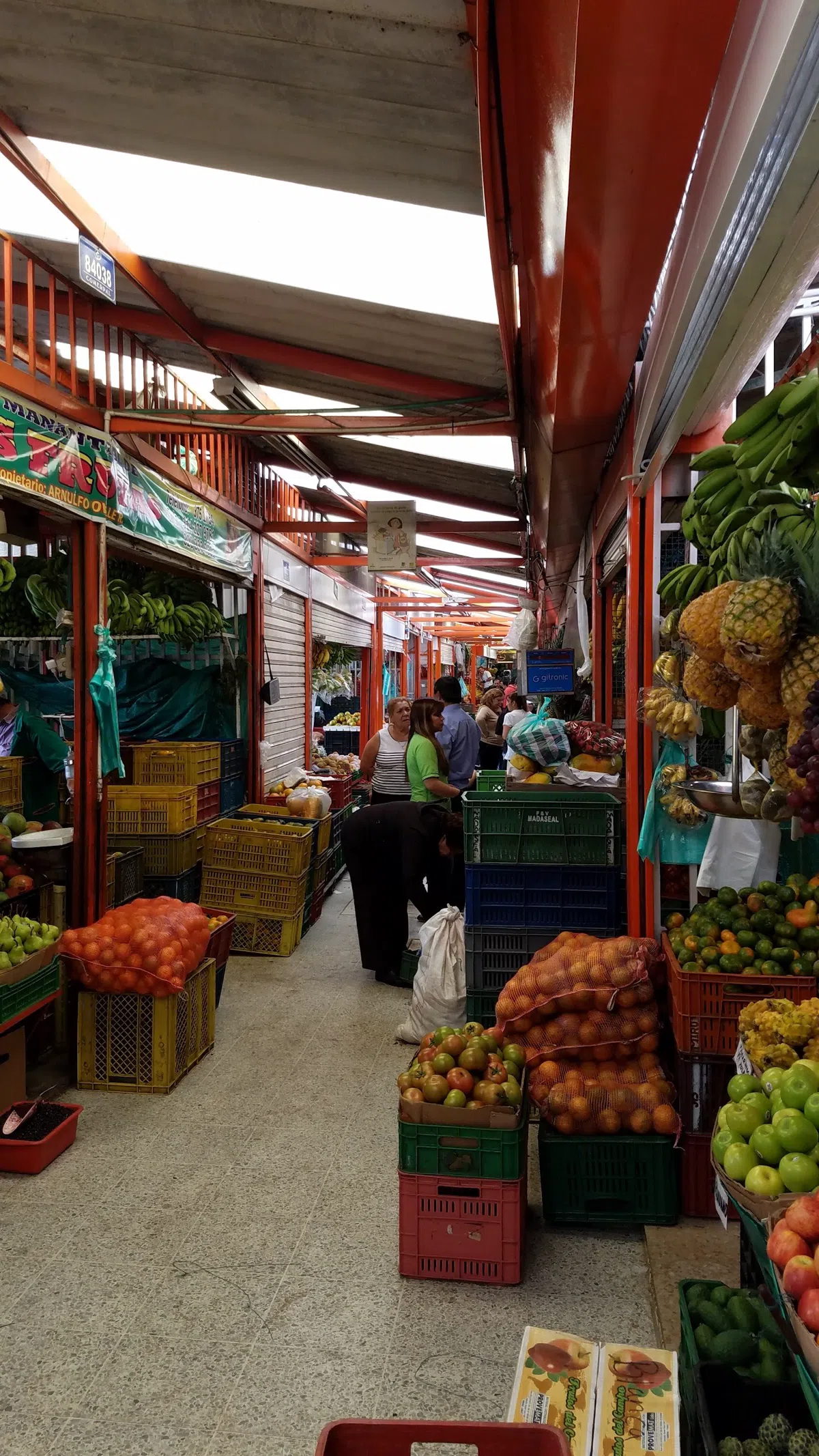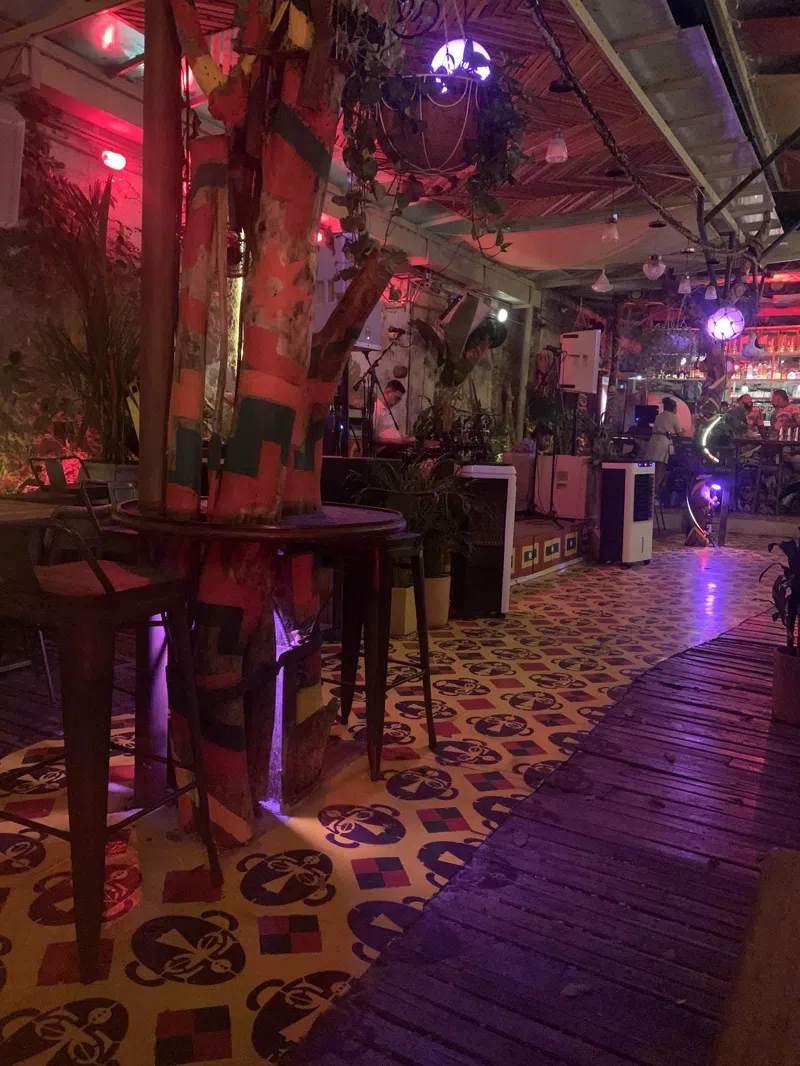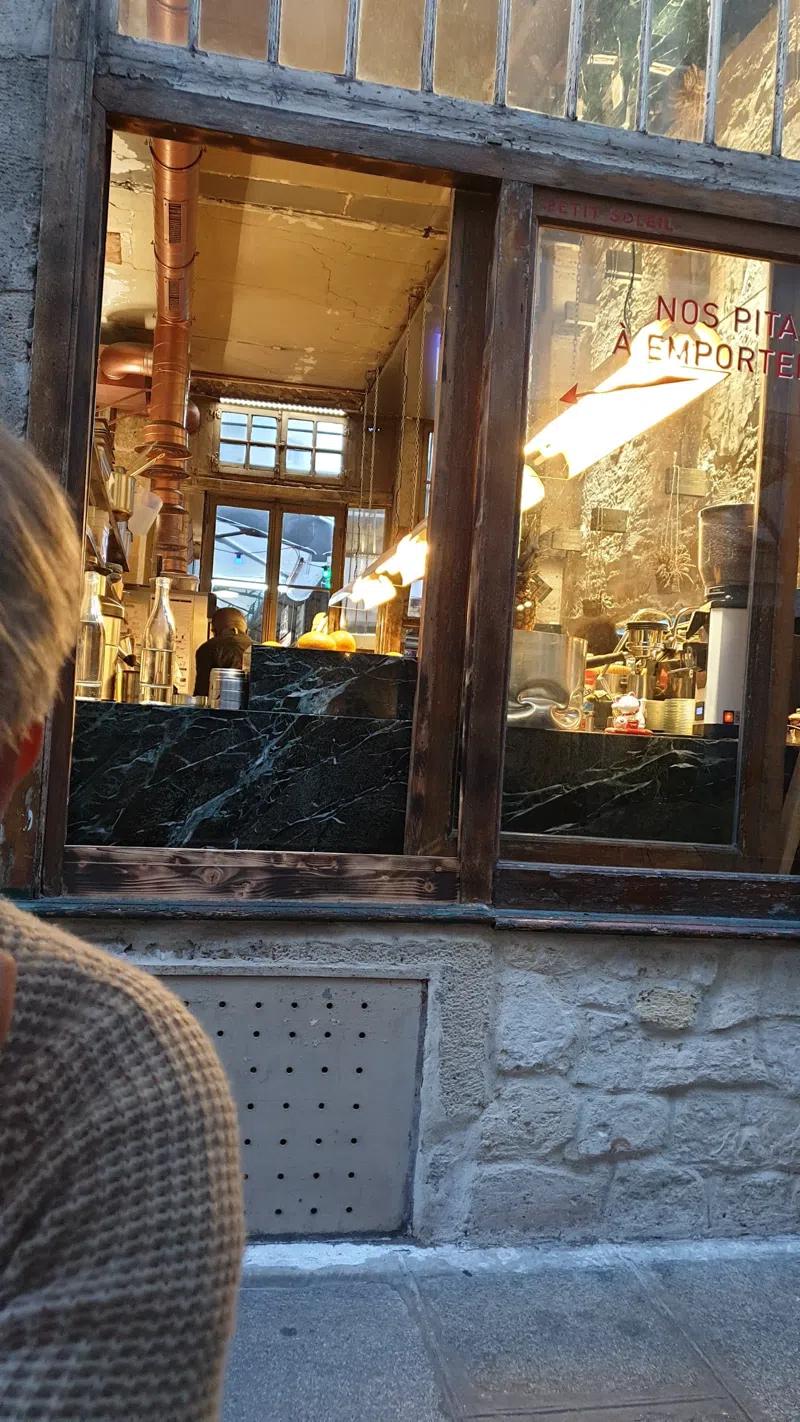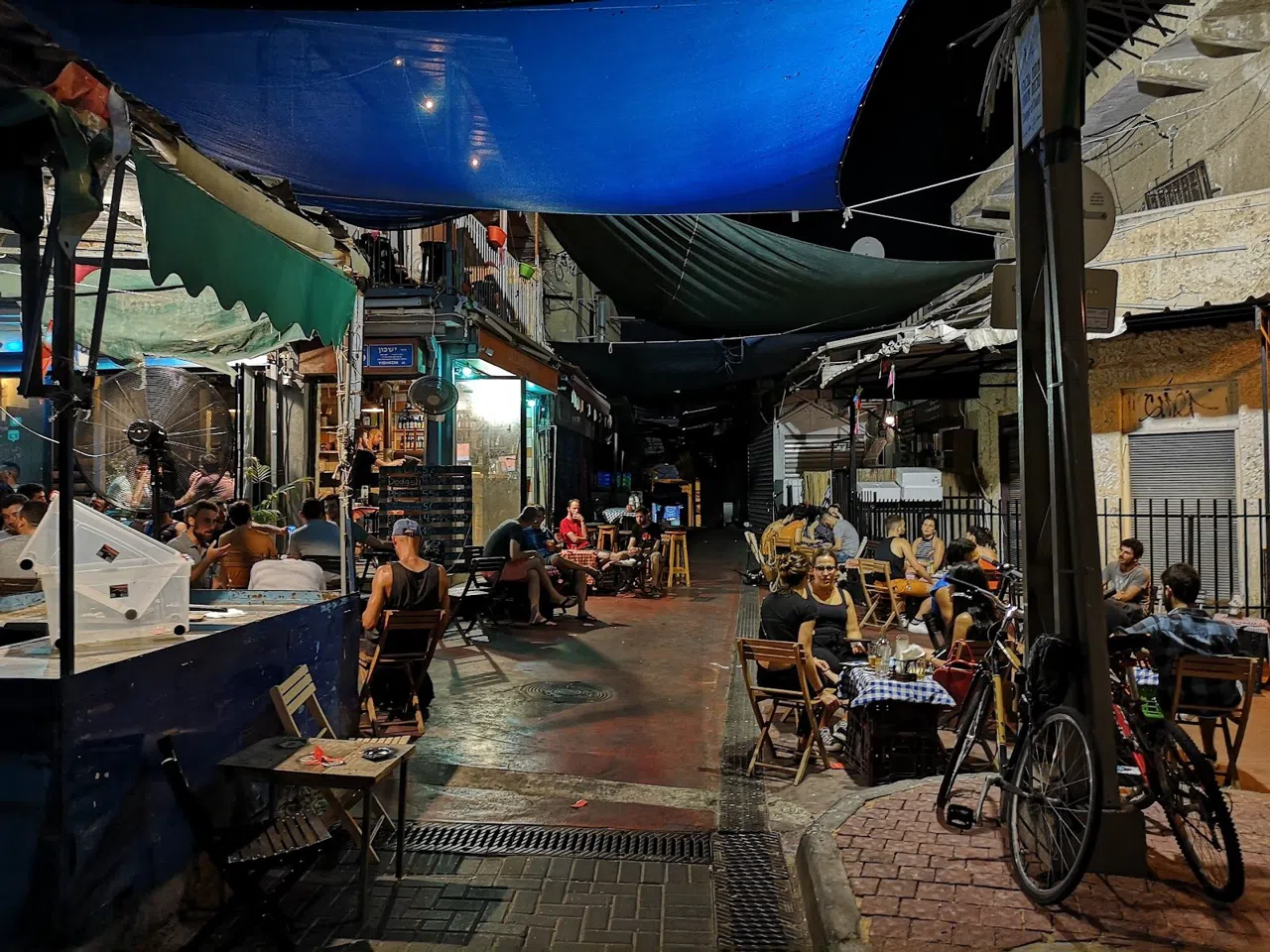
By ten p.m., the crates are gone and Carmel Market smells different — less cardboard and citrus, more charcoal and arak. Stallholders who spent the day shouting prices for peppers and pomegranates are now standing on the other side of a bar, ordering the same craft beer they've been eyeing since six a.m., and the alleys that were packed with produce carts at noon are packing again for reasons that have nothing to do with vegetables. This is the shuk's second shift, and it runs on a different set of rules than the daytime market does — different hours, different crowds, different doors. This guide moves through it stall by stall, from the market's own bars to the one place still serving pita at one in the morning. For a base nearby, the Tel Aviv guide covers the wider city; this piece stays inside and just south of the shuk itself.
The Market's Own Bars
The obvious first stop, and the one that best proves the premise: Beer Bazaar Carmel Market, inside Shuk HaCarmel, is a walk-in bar with bar tables and standing room that absorbs a group of six to ten without anyone calling ahead. A beer runs ₪30-50. It's the market's own craft-beer institution — the bar the stallholders themselves use once their shutters start coming down — so showing up around seven or eight p.m. means drinking next to the people who spent the day selling you fish two stalls over.
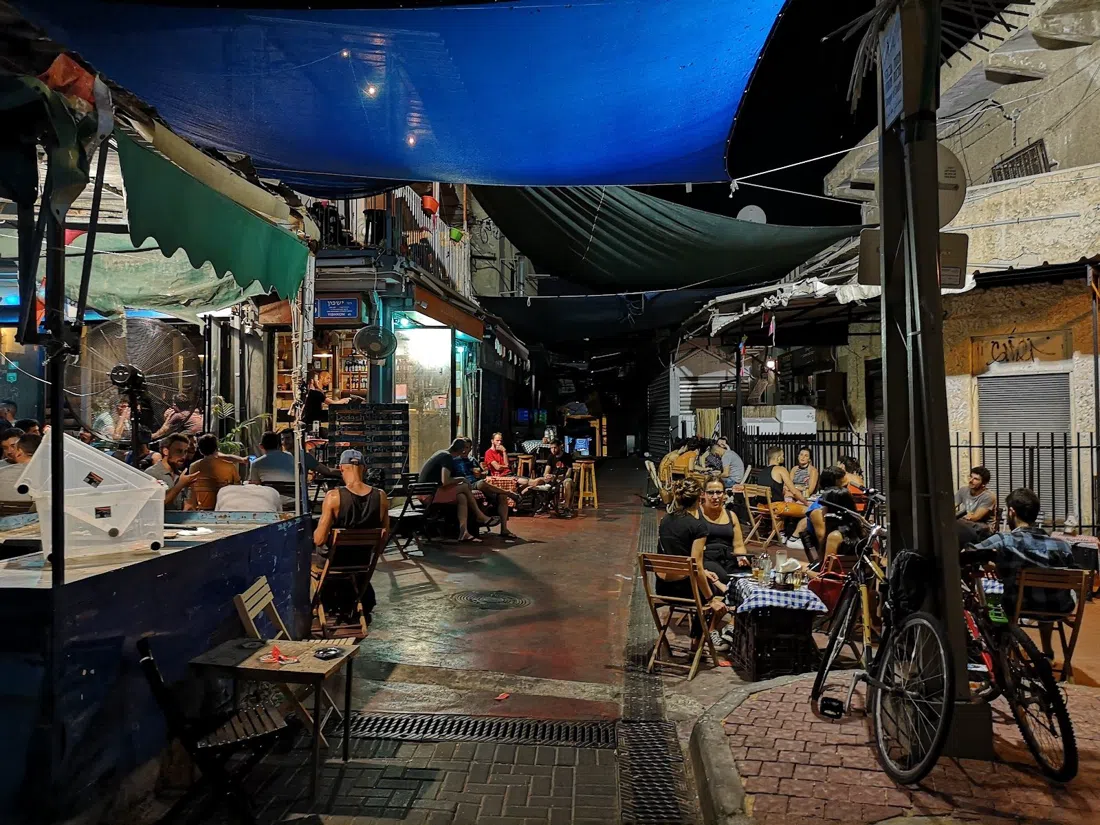
A few minutes deeper into the covered lanes, Istanbul, a casual market bar, keeps no reservation book and needs none. Drinks run ₪40-70, it's open until 2am most nights, and of everywhere on this list it's the clearest single stop for watching the market's physical shift from produce stalls to nightlife happen in real time — the same metal shutters that were selling spices at four p.m. are shut and taped with band flyers by ten.
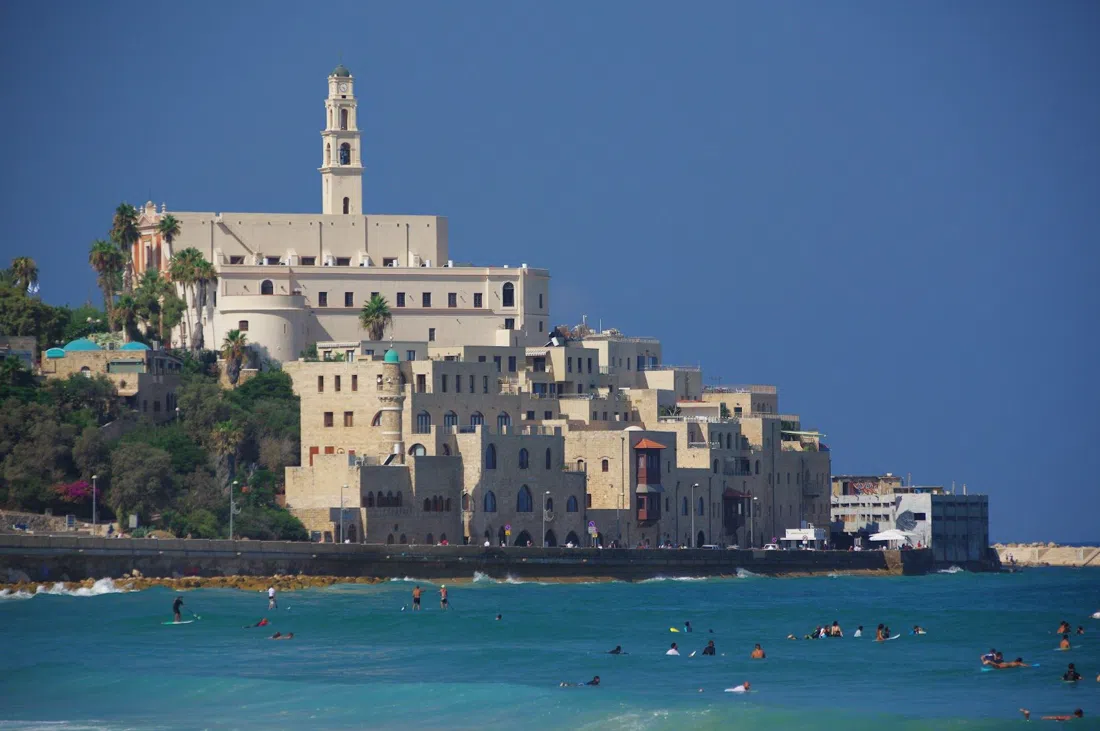
Cafe Yom Tov, also inside the market, does something odder: it's the same counter, same tables, same staff at nine p.m. as at nine a.m., but the drink changes — espresso in the morning, arak by evening, ₪20-45 either way. Seating is informal and groups can spread across separate tables, which makes it a reasonable stop for splitting a bigger group into twos and threes rather than trying to hold one table together.
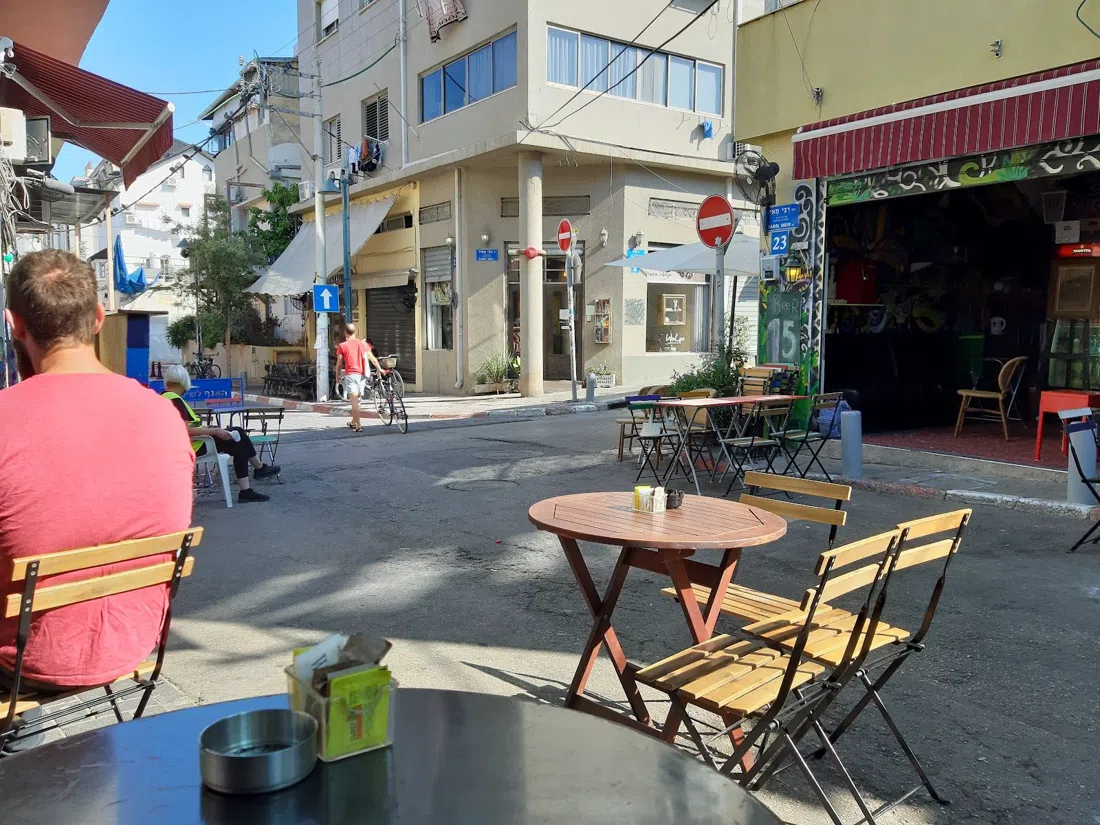
If everything market-adjacent has already gone quiet, HaMinzar, a dive bar a short walk from the market's edge, is the fallback: no door policy, beer cheap enough for a big round at ₪20-35, and open seven days a week — which none of the market bars above can promise on a slow Tuesday.
Reservations Worth Making: Dinner Inside the Shuk
For a group that wants an actual table rather than a bar rail, HaBasta, a small market restaurant, is the clearest proof the shuk never really closes — whatever the fish and produce stalls didn't sell by dusk becomes tonight's specials, plated for ₪300-400 for two with wine. The room is genuinely small; call +972-3-516-9234 ahead for any party over four, because there's no overflow seating once it fills, and on a Thursday or Friday it fills early.
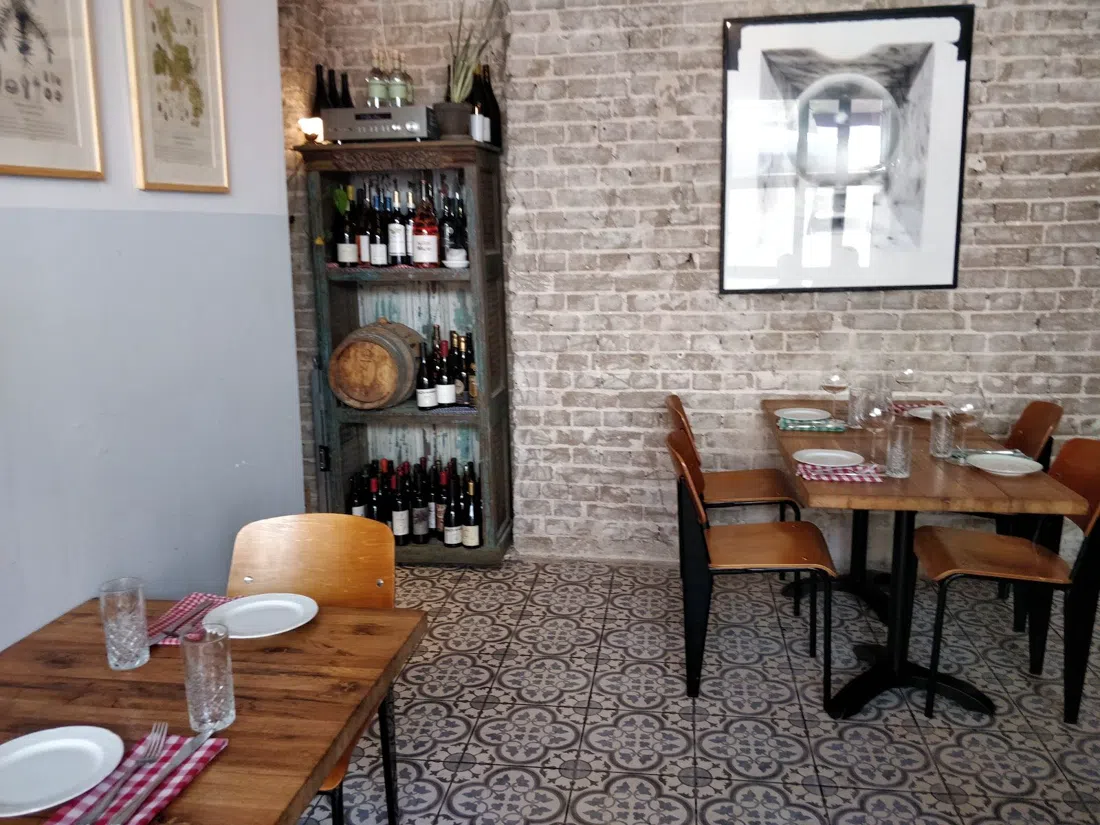
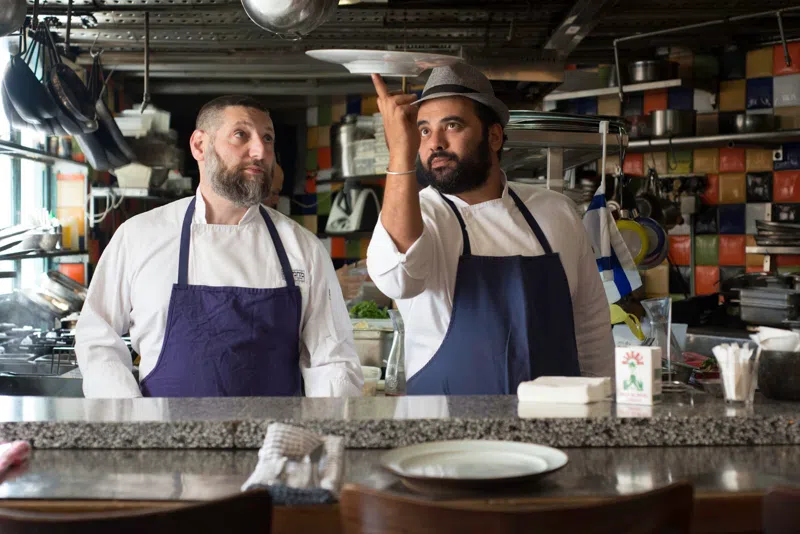
A few stalls over, M25 runs an actual steakhouse out of what still visibly looks, after dark, like a meat trade rather than a restaurant dressed up to resemble one. The room is tiny and groups over four to six should call ahead. Expect ₪150-250 per person and a menu that isn't for anyone squeamish about watching cuts get handled a few feet from the table — this is the market's meat business continuing after hours, not a themed reproduction of it.
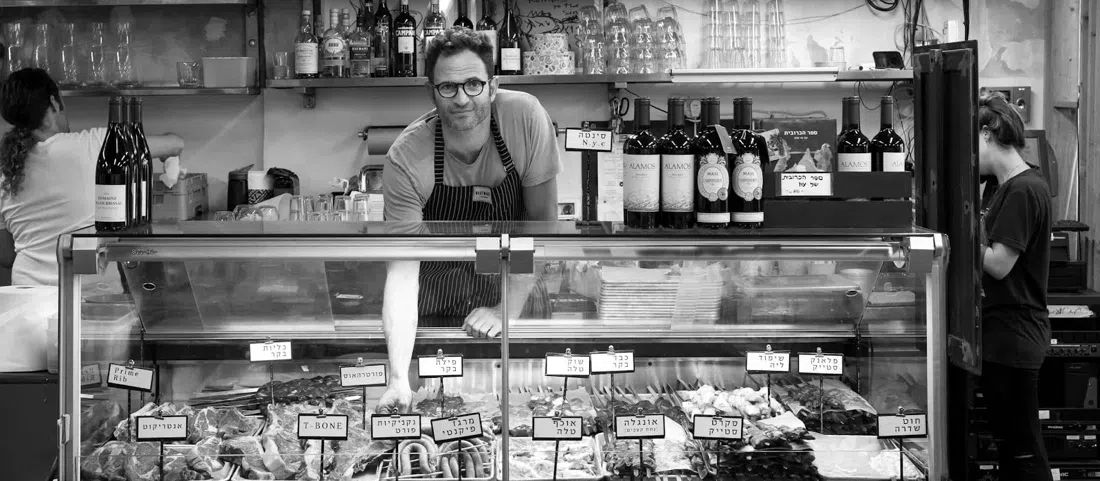
Just outside the market's core, Radler, a brasserie and bar, is the better anchor if the group wants a proper sit-down dinner service — 19:00 to 23:00 — rather than a snack squeezed between bar stops. A reservation is recommended, moderate-sized groups are fine, and a meal runs ₪180-280 per person.
Cocktails and a Later Crowd
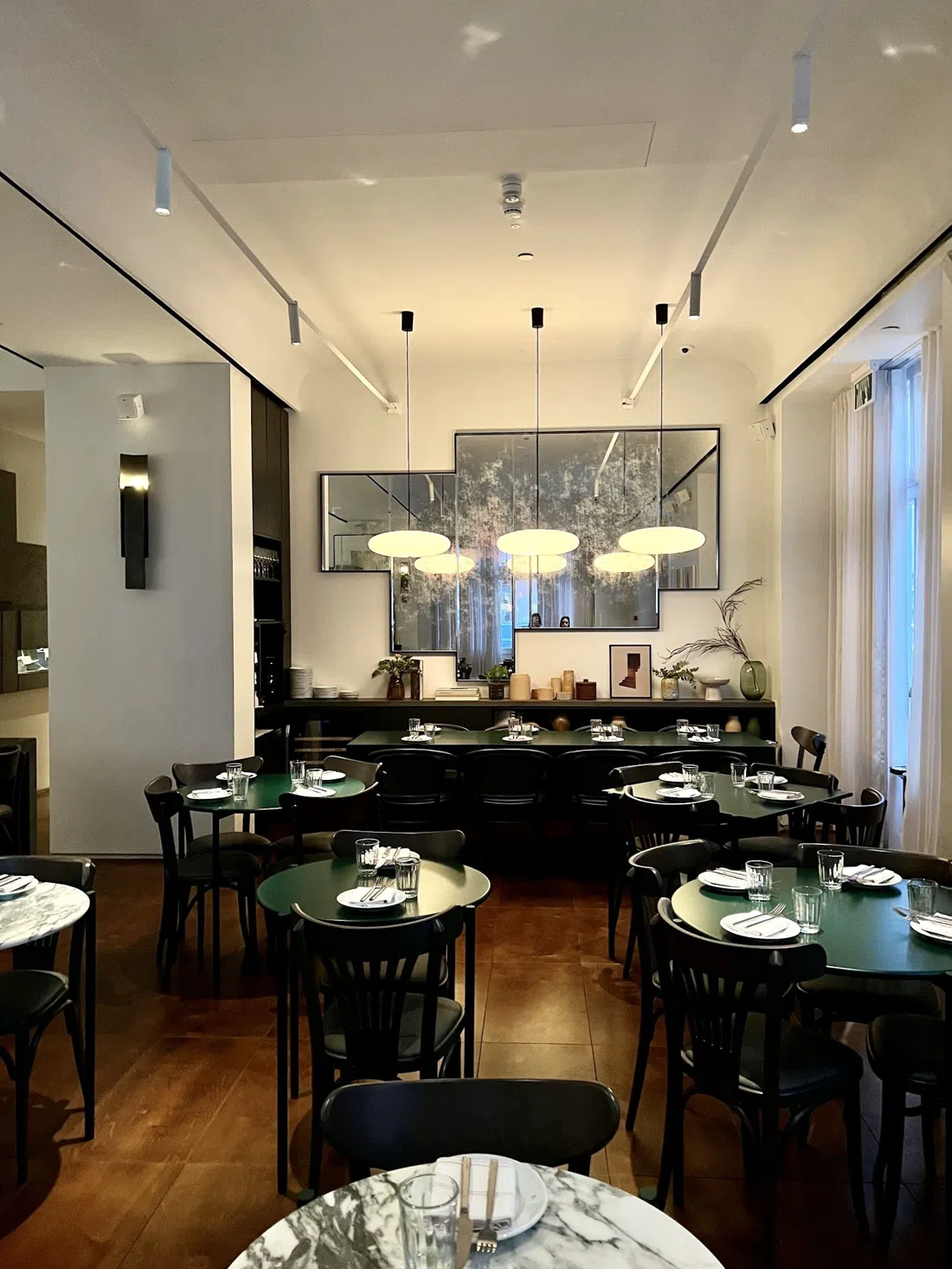
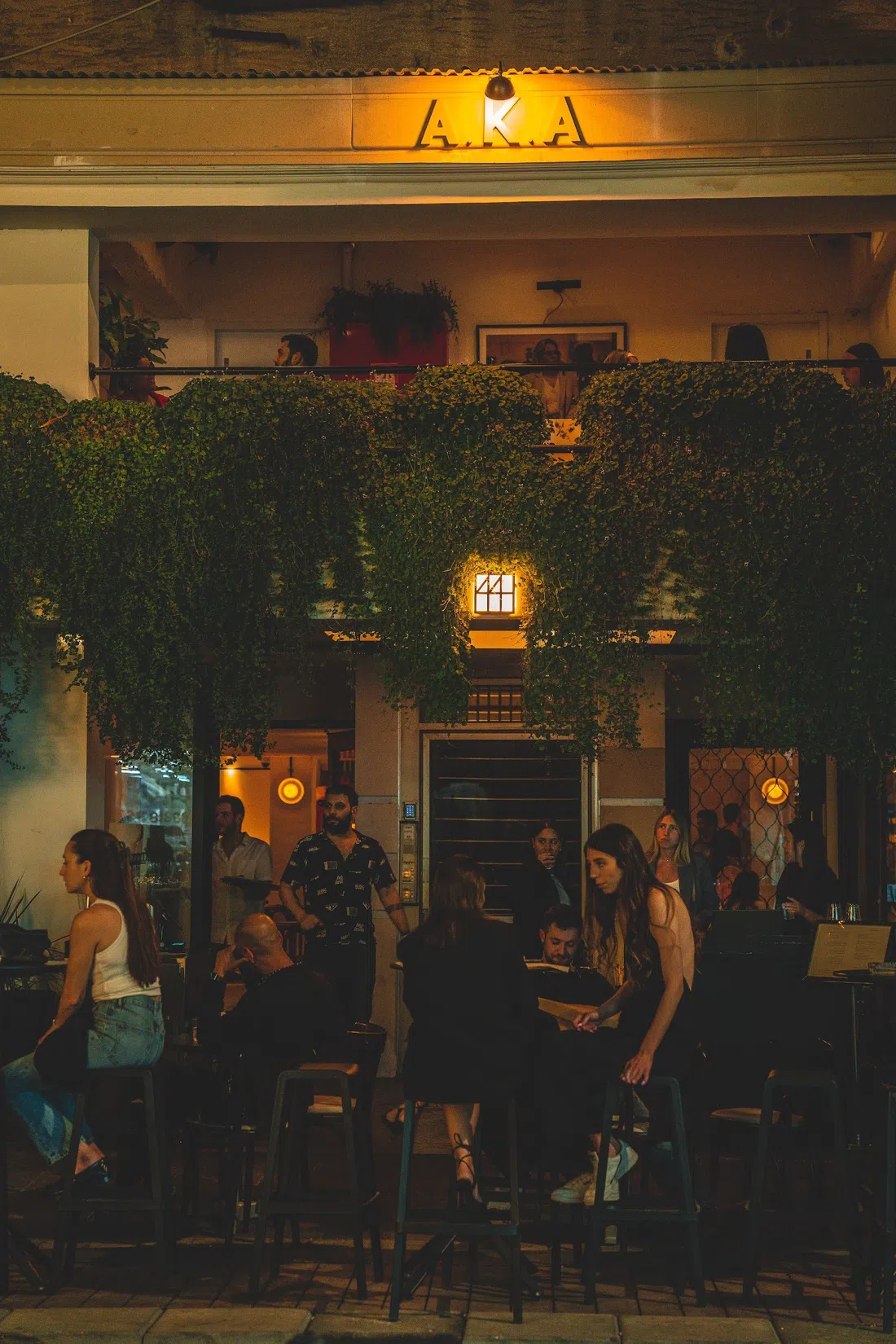
AKA44, a cocktail and wine bar near the market spread across multiple floors, is built for a group that wants to split up and regroup later — pick a floor to match the mood, from casual bites on the lower level to a quieter wine balcony above. Cocktails run ₪50-80, at the higher end for the area, which tracks with the room.
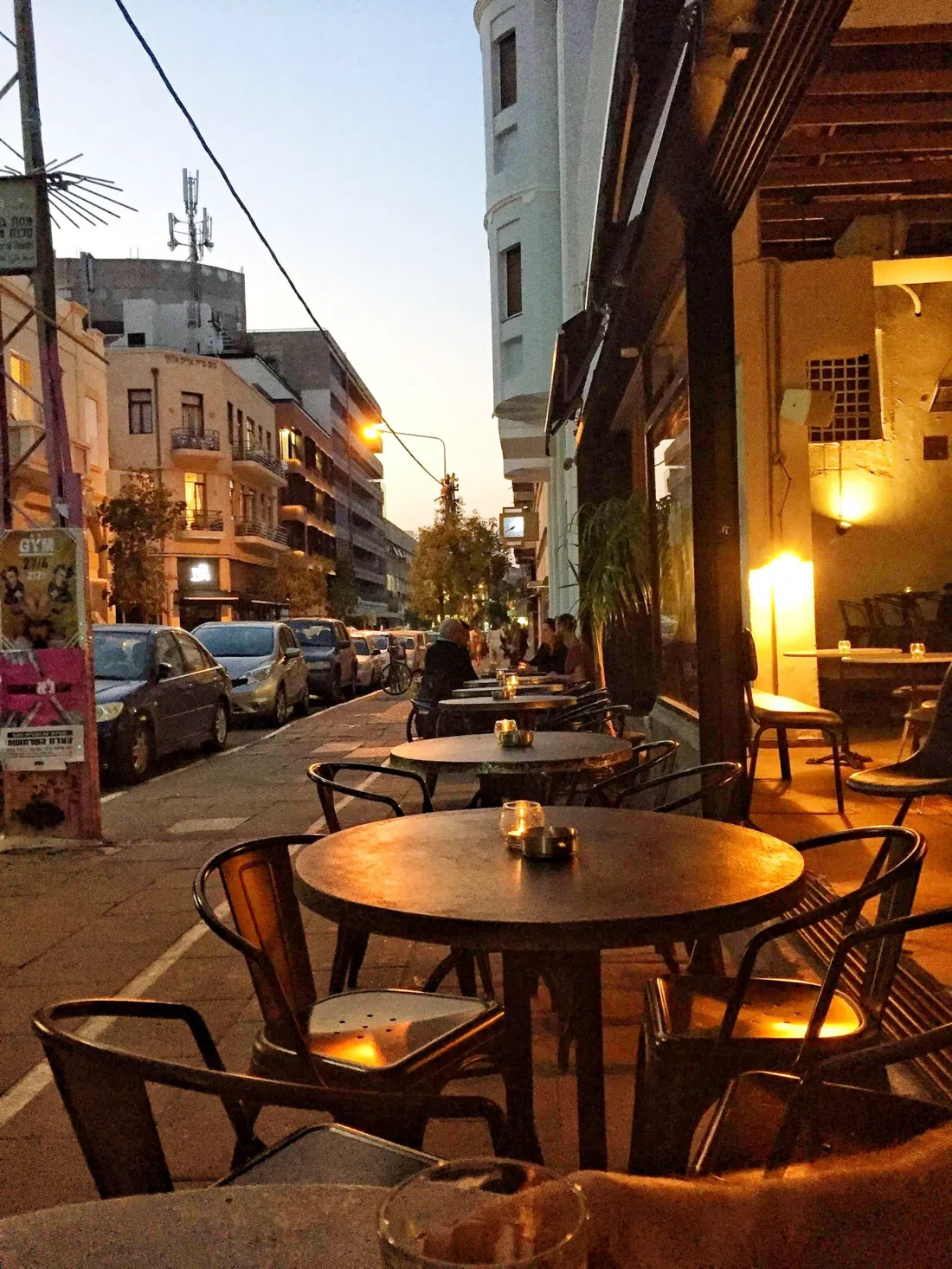
On the market's pedestrian mall, Shpagat, a bar with an LGBTQ-friendly crowd, flips from craft stalls by day into one of the city's better small dance bars by night. It opens at 21:30, draws a mixed and welcoming crowd, and drinks run ₪35-55 — worth timing an arrival for after 22:00, once the room has actually filled rather than at the door.
South of the Market, After Midnight
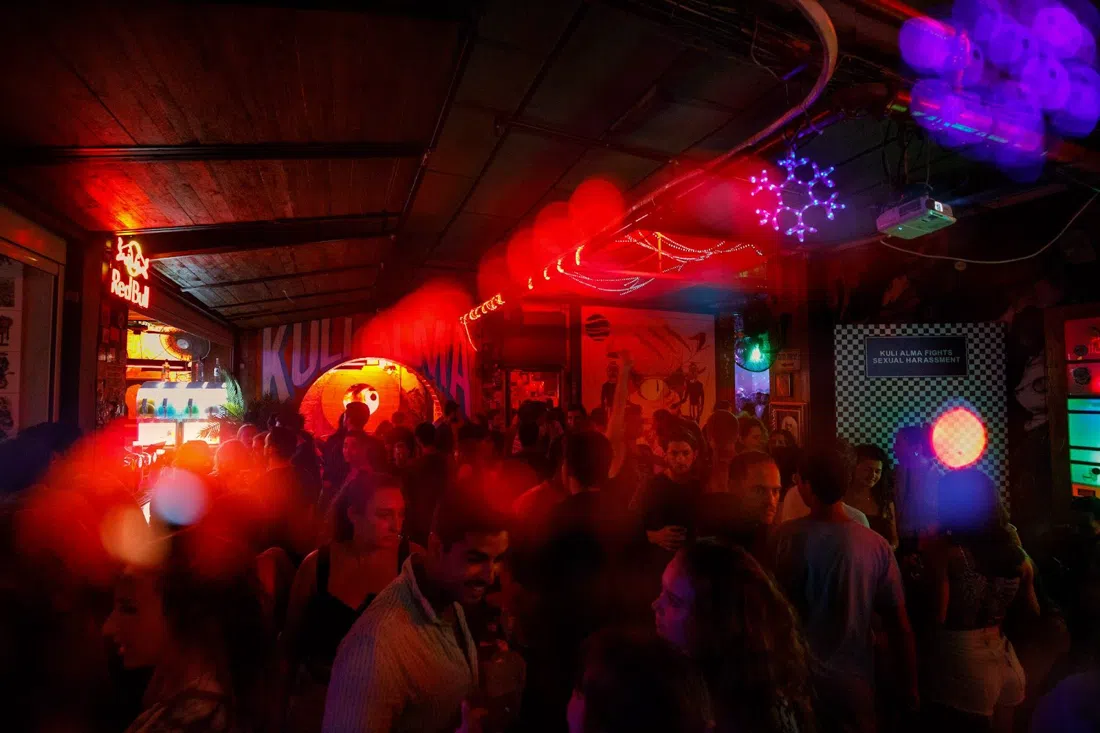
Once the bar-lined streets around the shuk start winding down — past midnight on a weekend — Kuli Alma, a club and art bar a short walk south of the market, is the after-midnight option, with a courtyard that's genuinely welcoming to groups. The one honest caveat: the door can turn selective for large all-male groups late on weekend nights, so a mixed group has an easier run at it than an all-male one arriving after 1am. Drinks run ₪40-60.
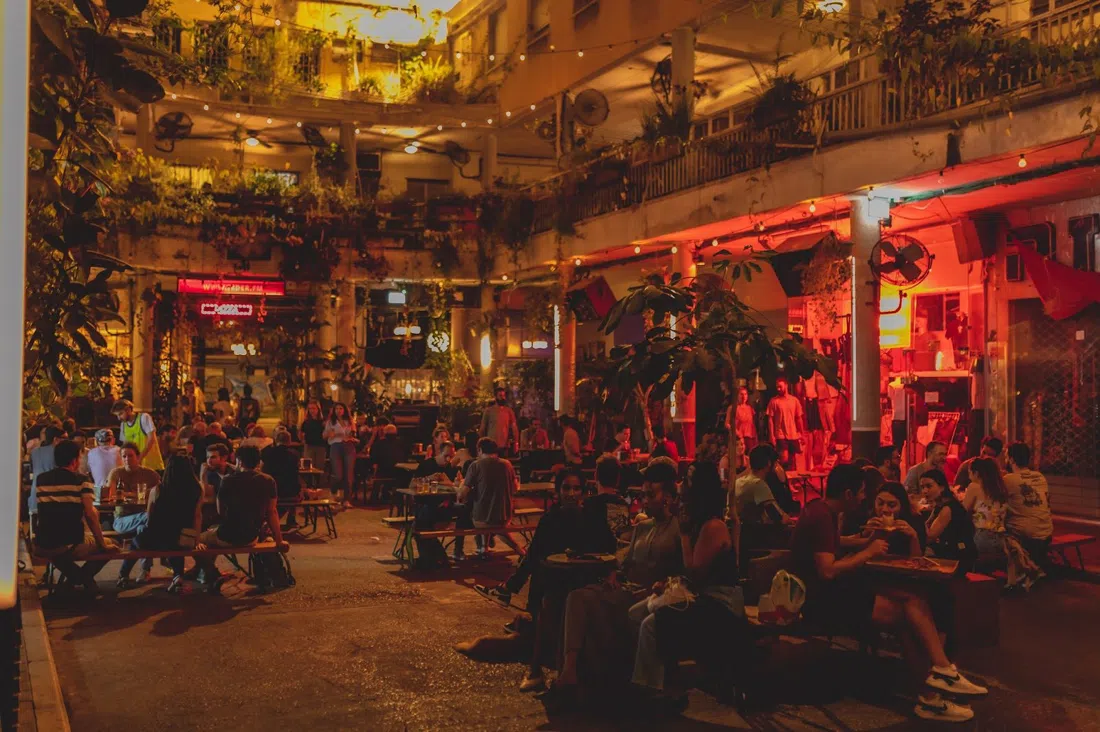
Also a fifteen-minute walk south, Teder.fm, an open-air bar and live-music venue, has no strict door policy and a courtyard large enough for a big group to actually stay together rather than get split at the entrance. The draw is the music — genuinely no-cover live sets most nights from 18:00 — which makes the walk worth it before the ₪35-55 drinks even factor in.
The Last Stop
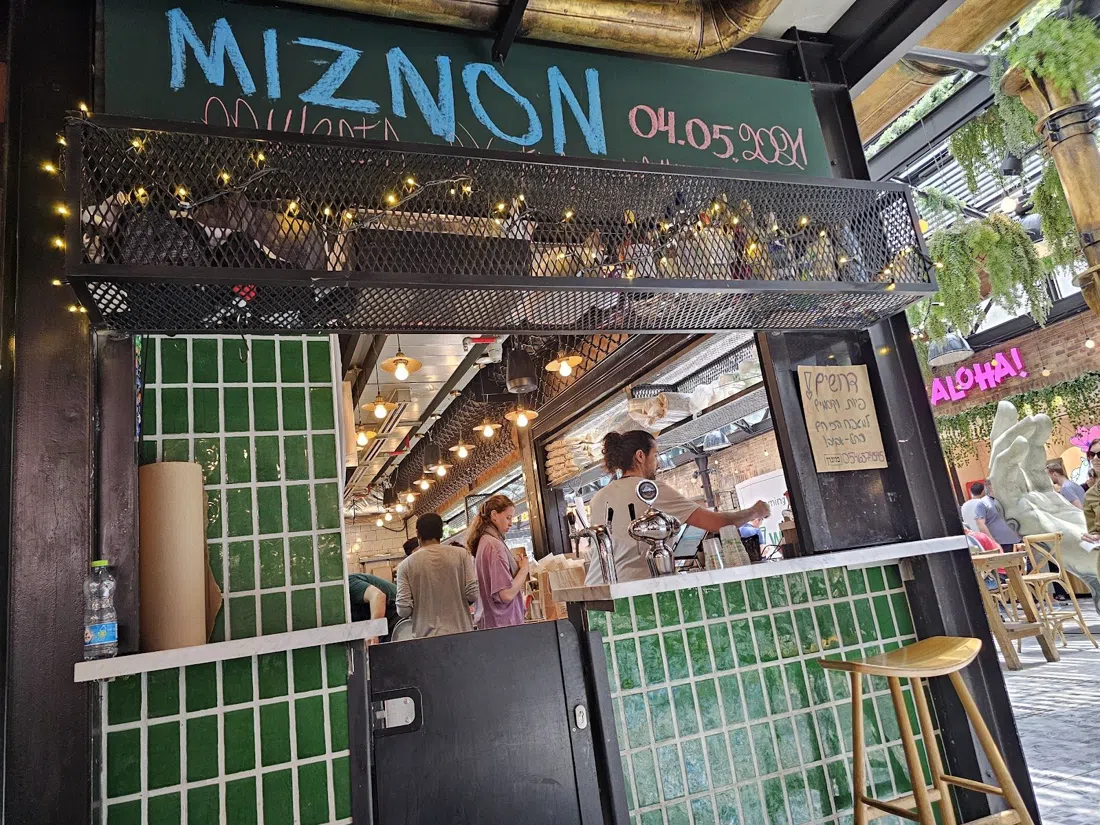
When the bars start closing, Miznon King George, Eyal Shani's late-night pita counter, is the market's unofficial answer to being hungry at one a.m. It's counter service — order individually, not as a table — and groups should expect to queue; a pita runs ₪35-55.
For something smaller and cheaper to close on, Hamalabiya, a dessert kiosk, is grab-and-go with no seating pressure and no real group-size limit. The malabi-and-beer combo at ₪10 a cup is the least expensive, most local way to end a night of market bar-hopping — a cold pudding and a cold beer for the price of a short bus ride, not a production.
Getting There, Cash, and Timing
Transport. Carmel Market sits between Allenby Street and King George Street, walkable from most central Tel Aviv accommodation; if you're staying further out, a Tel Aviv hotel search for something closer to the shuk or Rothschild Boulevard cuts the late-night trip down to a walk instead of a ride. Gett and Uber both operate in the city and are the reliable way back after the last bus has stopped running for the night — don't count on finding a taxi rank right at the market entrance after midnight; book from the app instead.
Cash. Card readers are common now at the bars and restaurants on this list, but the smaller kiosks and late-night stalls — Hamalabiya included — are still more reliably cash-first. Carry small notes; nobody at a ₪10 malabi stand wants to break a large bill.
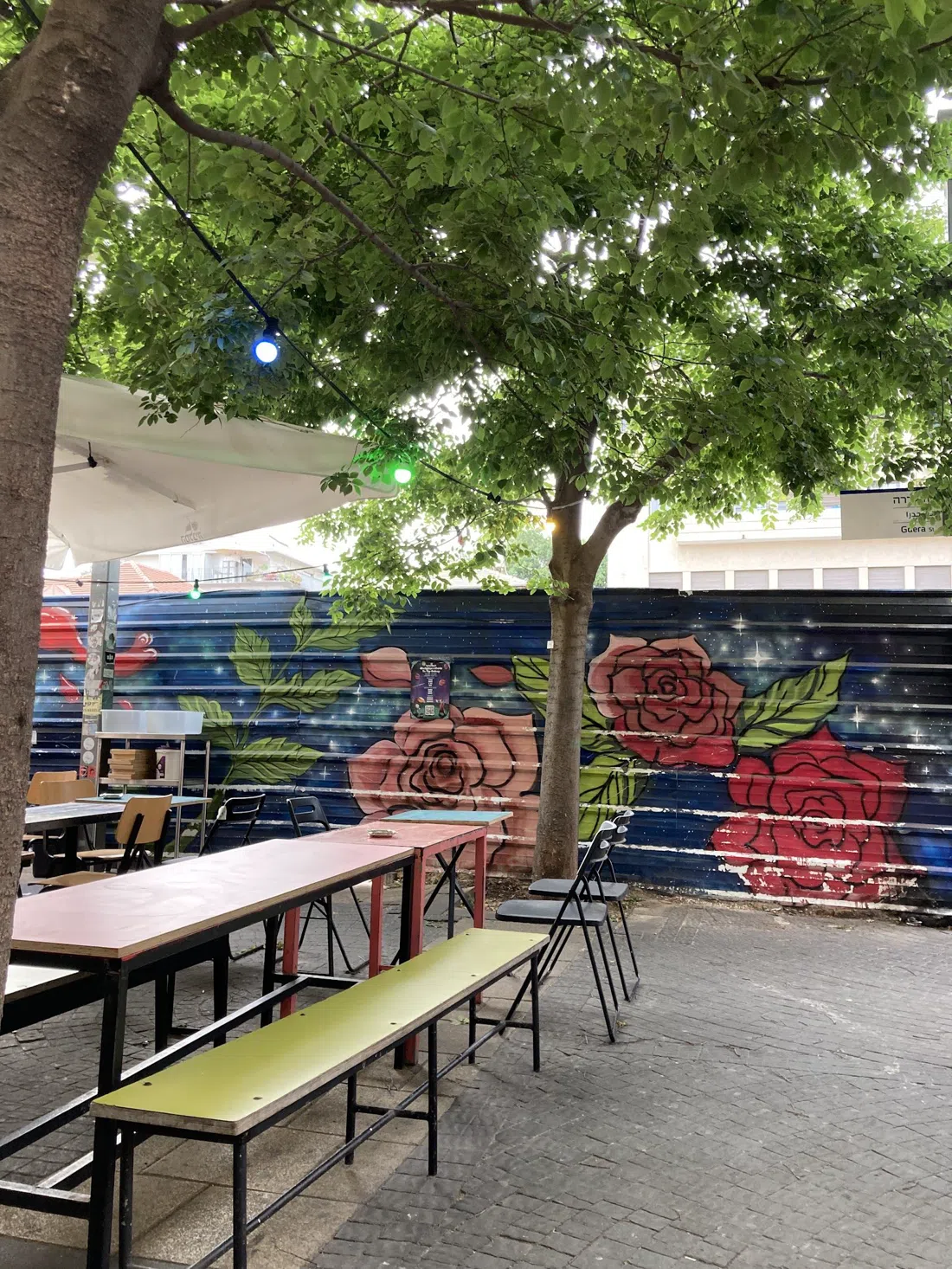
Timing. There's no single closing bell for the day market and opening bell for the night one — the transition is gradual, with stalls packing up from around six or seven p.m. and the bars that occupy the same footprint filling in behind them over the following hour. Arriving right at that changeover means watching shutters come down around you as your first beer arrives. Friday afternoon is the exception: most of the market closes early ahead of Shabbat, and the shuk's own night-market energy shifts to Saturday night once Shabbat ends, so don't plan a Friday-night market crawl around the stalls themselves.
Budget. A no-frills night — Beer Bazaar or Istanbul for drinks, Miznon or Hamalabiya to finish — runs comfortably under ₪150 a person. Add a sit-down dinner at HaBasta, M25 or Radler and a couple of cocktails at AKA44 or a club stop at Kuli Alma, and a fuller night lands closer to ₪400-500 a person. Either way, the market rewards moving on foot between stops rather than planning one long sit — most of what makes it worth the trip after dark is the walk between a produce stall gone quiet and a bar just opening two doors down.